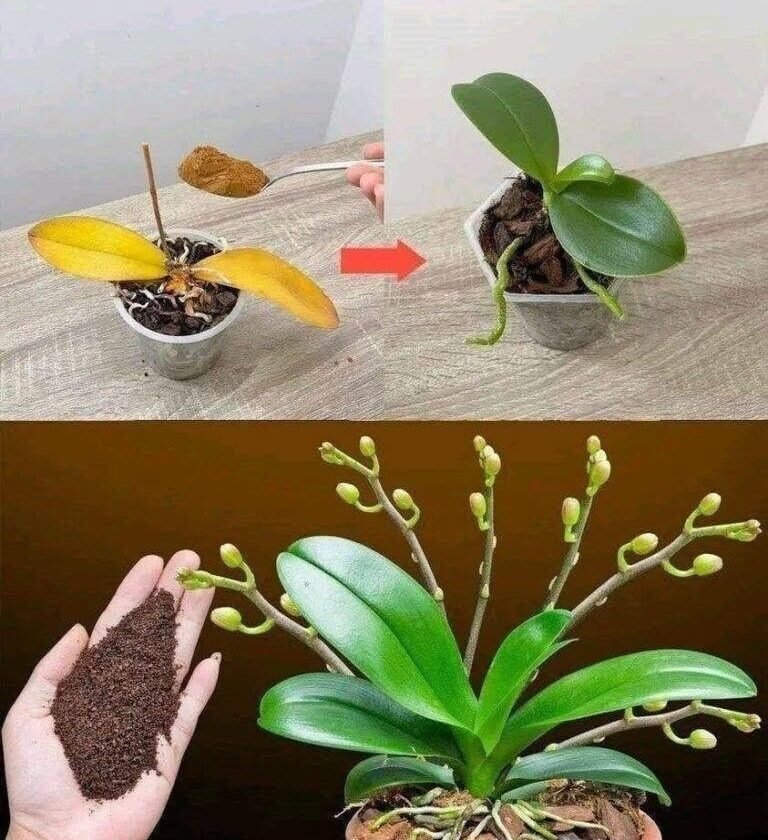
If you’re referring to the viral “one teaspoon and your orchid suddenly explodes with flowers” gardening trick, be cautious. There isn’t a magic kitchen ingredient that reliably makes an orchid bloom overnight.
A teaspoon of a fertilizer or homemade mixture can sometimes help only if the plant actually needs those nutrients. Orchid flowering depends much more on the species, light, temperature, watering, roots, and the plant’s overall health.
For most common Phalaenopsis orchids, better results come from:
Bright, indirect light rather than deep shade.
Watering thoroughly when the potting medium is approaching dry, then allowing excess water to drain.
Using an orchid fertilizer according to its label, rather than concentrated homemade mixtures.
Avoiding fertilizer buildup in the potting medium.
Providing a modest day/night temperature difference, which can help trigger flowering in mature Phalaenopsis plants.
And don’t pour sugar, baking soda, vinegar, or undiluted fertilizer into the pot simply because a viral video claims it produces flowers. Too much fertilizer or an unsuitable household ingredient can damage the roots.
If you tell me what the “one teaspoon” ingredient is, I can explain whether that particular orchid hack actually works.