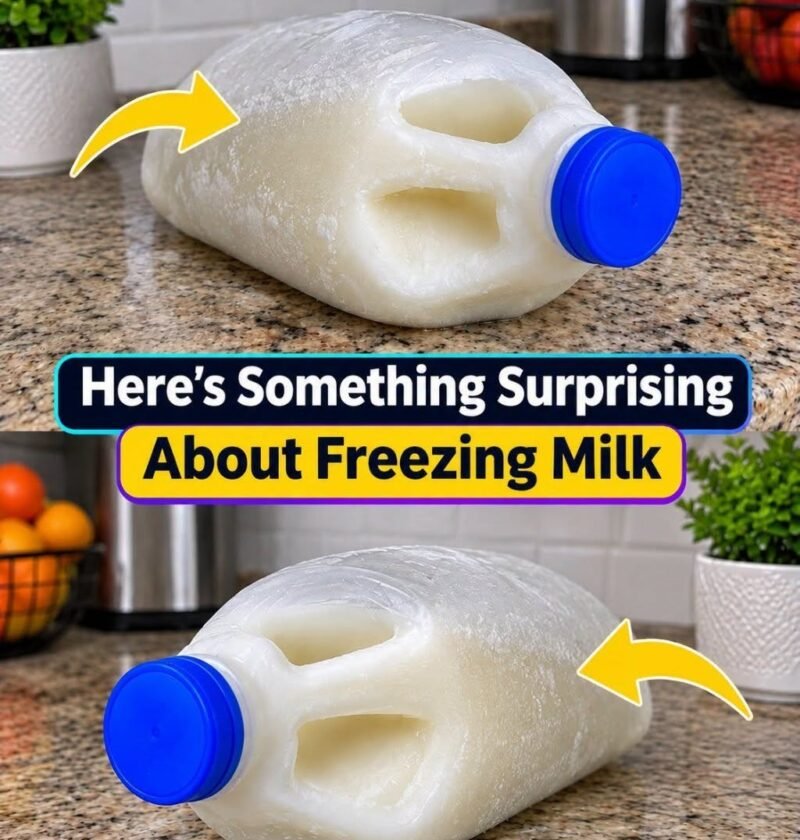
When viral food hacks tease that “freezing milk can…” with a dramatic cliffhanger, they usually exploit a common kitchen anxiety: the fear that freezing dairy will ruin it, turn it into a science experiment, or create a toxic hazard.
The reality is much simpler and far less dramatic. Yes, you can freeze milk safely, and it is a fantastic way to prevent food waste if you are heading out of town or bought extra. However, freezing does cause a distinct physical change that catches many people off guard.
What Actually Happens When You Freeze Milk
1. Separation of Fats and Water
-
The Mechanism: Milk is an emulsion—a delicate suspension of water, fats, proteins, and sugars (lactose). When milk freezes, water expands into ice crystals, and the fat molecules separate from the liquid.
-
The Result: When you thaw frozen milk, it will often look grainy, watery, or slightly separated.
2. The Fix: Shake Vigorously
-
How to Handle It: Once the milk is completely thawed in the refrigerator, give the jug or container a vigorous, thorough shake. While it might never look quite as homogeneously smooth as fresh milk straight from the store, the emulsion will largely come back together, especially in whole or reduced-fat milk (skim milk holds up even better because it has less fat to separate).
Golden Rules for Freezing Milk
-
Leave Headroom: Liquids expand as they freeze. If you freeze milk in a glass bottle or a tightly filled plastic jug right up to the brim, the container can crack or burst. Always pour out a small amount to leave about an inch of headspace at the top.
-
Best Used for Cooking or Baking: Because of the slight textural change upon thawing, frozen-and-thawed milk is not always the best choice for pouring over a cold bowl of cereal. However, it works perfectly for cooking, baking, smoothies, pancakes, or morning coffee where texture separation is completely unnoticeable.
-
Check the Clock: For best taste and quality, try to use frozen milk within 1 to 3 months. While it remains safe to consume indefinitely in a deep freeze, older frozen milk can absorb flavors from other items in your freezer or develop a slightly off taste.