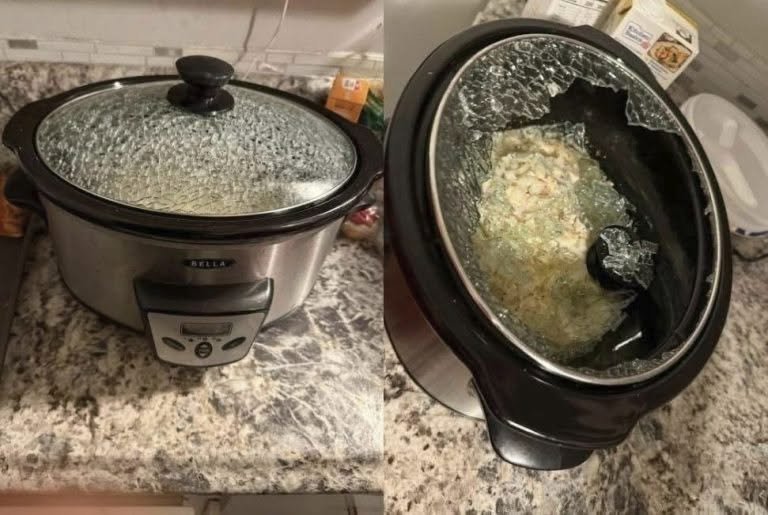
If you’re asking whether this headline is accurate: “never” is too strong. Most foods can technically be cooked in a slow cooker, but some are poor choices for texture, food safety, or cooking quality.
Common foods that are better handled separately or added later include:
Pasta — can become mushy; add near the end.
Rice — timing varies considerably; some types turn soft or absorb too much liquid.
Dairy — milk, cream, and some cheeses can curdle; add toward the end.
Seafood — delicate fish and shellfish can become rubbery if cooked for hours.
Fresh herbs — delicate herbs such as parsley and basil often lose their fresh flavor; add near serving.
Tender vegetables — zucchini, peas, spinach, and similar vegetables can become overcooked; add later.
Quick-cooking meats — chicken breast and other lean cuts can dry out during very long cooking.
Frozen meat — shouldn’t be put directly into a slow cooker because it can spend too long at unsafe temperatures while thawing.
Large amounts of alcohol — don’t assume it will evaporate completely in a covered slow cooker.
Certain beans if improperly prepared — dried red kidney beans contain phytohaemagglutinin and should be boiled vigorously before slow cooking.
Thickening agents — flour or cornstarch can work, but often give better results when added toward the end rather than cooked for many hours.
The important distinction is “not ideal for slow cooking” versus “unsafe.” Frozen meat and improperly prepared kidney beans deserve particular attention; pasta or dairy are primarily quality issues.