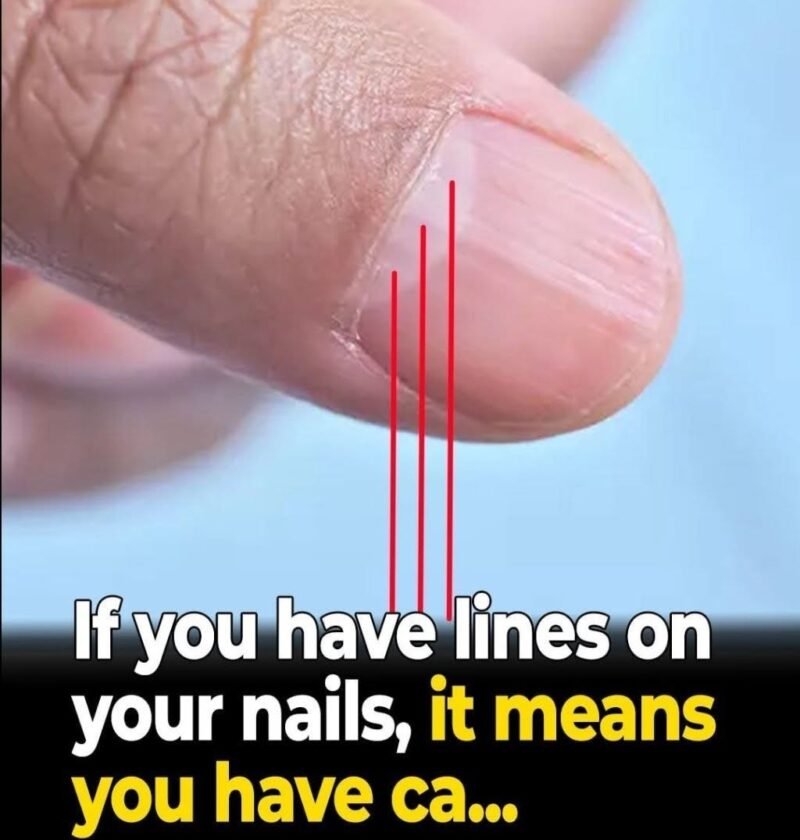
When viral medical headlines claim that a simple glance at your fingernails can predict your life expectancy or reveal a hidden countdown, it is classic clickbait designed to exploit health anxiety. No single physical mark can mathematically forecast how long you will live.
However, there is a kernel of truth behind the sensationalism: your fingernails act as a biological window into your systemic health. Because nail growth is tied directly to your circulatory, nutritional, and metabolic status, sudden or chronic changes in nail texture, color, or shape can serve as early warning signs of underlying medical conditions.
Here are the nail signs doctors actually look at—and what they can reveal about your health:
1. Clubbing (Rounded, Widened Fingertips)
-
What It Looks Like: The tips of your fingers widen and round out, and the nails curve sharply downward like an inverted spoon.
-
What It Can Indicate: Nail clubbing happens when oxygen levels in the blood are chronically low over a long period. It is frequently associated with underlying pulmonary conditions (such as chronic obstructive pulmonary disease, lung cancer, or cystic fibrosis), as well as cardiovascular disease or chronic gastrointestinal disorders.
2. Splinter Hemorrhages (Tiny Dark Vertical Lines)
-
What It Looks Like: Tiny, reddish-brown or black vertical lines under the nails that look like tiny splinters.
-
What It Can Indicate: These are caused by micro-hemorrhages from tiny damaged blood vessels under the nail bed. While frequently the result of minor physical trauma (like bumping your finger), persistent or multiple splinter hemorrhages can sometimes signal infective endocarditis (a serious infection of the heart valves) or systemic vasculitis.
3. Terry’s Nails (Mostly White Nails with a Dark Band)
-
What It Looks Like: The majority of the nail appears stark white, with a characteristic dark or reddish-brown band near the tip.
-
What It Can Indicate: This change is caused by a decrease in blood vessel density in the nail bed. Doctors watch for Terry’s nails because they are frequently associated with cirrhosis (liver disease), congestive heart failure, or type 2 diabetes.
4. Spoon Nails / Koilonychia (Concave, Depressed Nails)
-
What It Looks Like: Nails that become thin, brittle, and scoop inward so much that they can hold a tiny drop of water.
-
What It Can Indicate: Most commonly, this points to severe iron-deficiency anemia. In rare cases, it can be linked to hemochromatosis (an iron overload disorder), heart disease, or hypothyroidism.
5. Beau’s Lines (Horizontal Ridges or Dents)
-
What It Looks Like: Deep grooves or horizontal indentations running all the way across the nail plate.
-
What It Can Indicate: Nail growth temporarily pauses when the body undergoes severe physiological stress. Beau’s lines can appear weeks or months after a major systemic illness, high fever, severe infection, uncontrolled diabetes, or a period of extreme physical or emotional trauma.
The Medical Reality: Correlation vs. Prediction
While these nail signs do not directly “predict life expectancy,” they can flag hidden systemic diseases that do require medical attention. Catching an underlying condition like severe anemia, a heart valve infection, or early liver dysfunction early allows for timely treatment, which in turn protects long-term health and longevity.
⚠️ When to See a Doctor:Minor nail ridges, white spots (often from harmless minor trauma to the nail matrix), or slow-growing nails are usually completely normal parts of aging. However, if you notice sudden, dramatic changes in nail color, severe shape distortion (like clubbing), or painful swelling around the nail bed, it is worth bringing up with your physician during your next checkup.