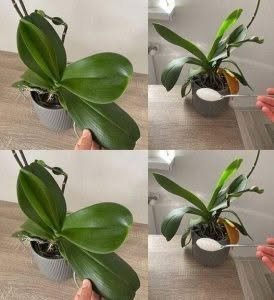
Viral gardening videos love to promise that a single “secret kitchen tablespoon”—whether it’s cinnamon, rice water, garlic juice, or sugar—will magically force your orchids to bloom non-stop with zero effort.
While certain household ingredients contain trace nutrients, the reality of orchid care is that orchids are epiphytes (plants that grow on trees in the wild, not in soil) with very specific root and nutritional needs. No single kitchen condiment or magic tablespoon can replace proper light, temperature cycles, and balanced orchid-specific care.
What Kitchen “Fertilizers” Actually Do (and Their Risks)
-
The Claims: Social media hacks often suggest pouring rice water, milk, or diluted coffee, or sprinkling cinnamon and baking soda, claiming it acts as a “powerful hormone booster” for blooms.
-
The Reality:
-
Rice Water / Milk: While they contain minor starches or proteins, pouring organic kitchen liquids onto orchid potting media (like bark or sphagnum moss) invites mold, fungus gnats, and bacteria. It can quickly rot delicate orchid roots.
-
Sugar Water: Orchids manufacture their own sugars via photosynthesis. Adding sugar to the pot doesn’t feed the plant; instead, it feeds harmful fungi and bacteria in the root zone.
-
Cinnamon: Cinnamon is a mild natural antifungal that can be dusted lightly onto a cut or wounded root/stem to prevent infection, but dumping it into the potting mix as a fertilizer does nothing to encourage blooms.
-
What Actually Triggers Non-Stop, Healthy Orchid Blooms
Orchids don’t need gimmicks; they bloom when their natural environmental triggers are met. If you want abundant, long-lasting flowers, focus on these proven care fundamentals:
-
Bright, Indirect Light: The number one reason orchids fail to rebloom is lack of light. They need plenty of bright, filtered light (such as an east-facing window). Dark rooms will keep the plant alive, but it won’t have the energy to produce flower spikes.
-
The Temperature Drop (For Phalaenopsis): The most common indoor orchid, Phalaenopsis, initiates a flower spike in response to a natural seasonal cue: a slight drop in nighttime temperatures (down to about 55°F–60°F / 13°C–15°C) for a few weeks in the autumn.
-
Proper Watering (The “Soak and Dry” Method): Never let orchid roots sit in standing water, as they suffocate and rot. Instead, water thoroughly only when the roots turn silvery-gray (if in a clear pot) or when the bark feels completely dry, then let all excess water drain away completely.
-
Balanced Orchid Fertilizer: Instead of random kitchen scraps, use a water-soluble, balanced fertilizer formulated specifically for orchids (often labeled like a 20-20-20 or 10-10-10 formula), diluted to quarter-strength, and applied roughly once a month during the active growing season (“weekly, weakly”).