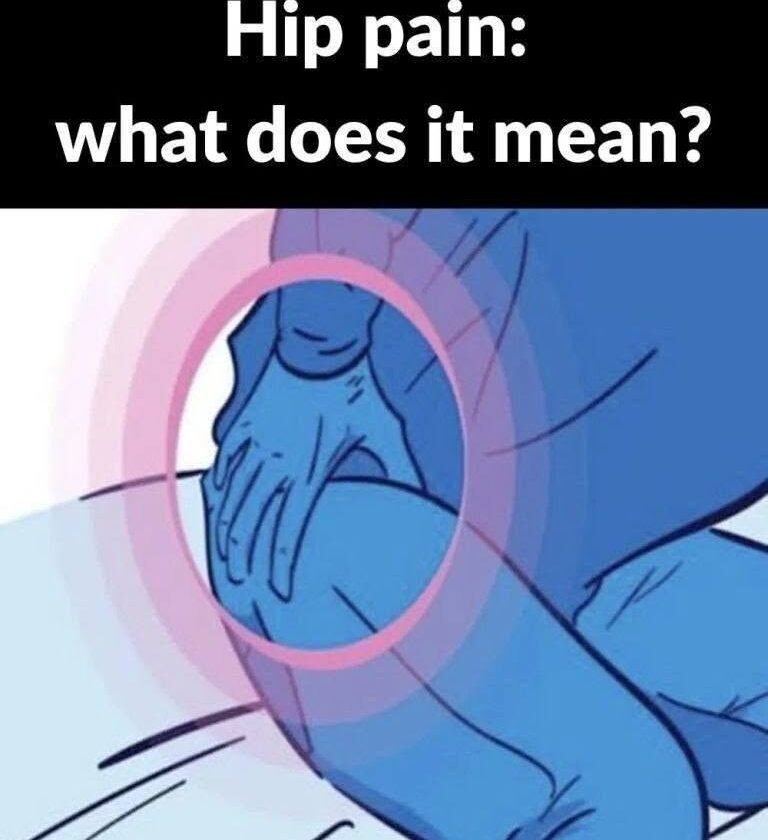
Hip pain is a common symptom that can mean several different things depending on where it hurts, how it feels, and what you were doing when it started. Because the hip joint is a complex meeting point for bones, cartilage, muscles, tendons, ligaments, and nerves, the location of the discomfort usually provides the best clue to its underlying cause.
What the Location of Your Pain Tells You
-
Pain on the Inside or Groin Area:
-
What it usually means: Issues located deep inside the joint itself or structural problems.
-
Common culprits: Osteoarthritis (wear-and-tear cartilage breakdown causing “bone-on-bone” friction), a hip labral tear (damage to the ring of cartilage cushioning the socket), or hip impingement (FAI).
-
-
Pain on the Outer Hip, Thigh, or Buttock:
-
What it usually means: Issues with the soft tissues—such as muscles, tendons, or fluid-filled sacs—that surround the joint.
-
Common culprits: Trochanteric bursitis (inflammation of the cushioning sacs on the outer hip, often painful when lying on that side), tendinitis, or tight IT bands.
-
-
Pain Radiating from the Lower Back:
-
What it usually means: Referred pain. Problems originating in the lumbar spine or pelvis—such as a herniated disc, sciatica, or sacroiliac (SI) joint dysfunction—frequently mimic or radiate down as hip and leg pain.
-
Other Potential Drivers of Hip Discomfort
-
Overuse or Strains: Sudden increases in physical activity, running, or repetitive twisting can strain the hip flexors, gluteal muscles, or groin tendons.
-
Fractures: Often resulting from a fall or trauma (or weakened bones from osteoporosis), fractures cause sharp, severe pain that usually makes it impossible to bear weight.
When to Seek Immediate Medical Attention
While minor aches can often be managed with rest, ice, and over-the-counter anti-inflammatories, you should seek urgent or emergency medical care if your hip pain is accompanied by:
-
Inability to move your leg or hip
-
Inability to bear weight on the leg
-
A joint that looks deformed, out of place, or if the leg appears shorter
-
Sudden, intense swelling, bruising, or signs of an infection (like fever and chills)
Are you experiencing a sharp or dull ache, and does it hurt more when walking, sitting, or lying down?