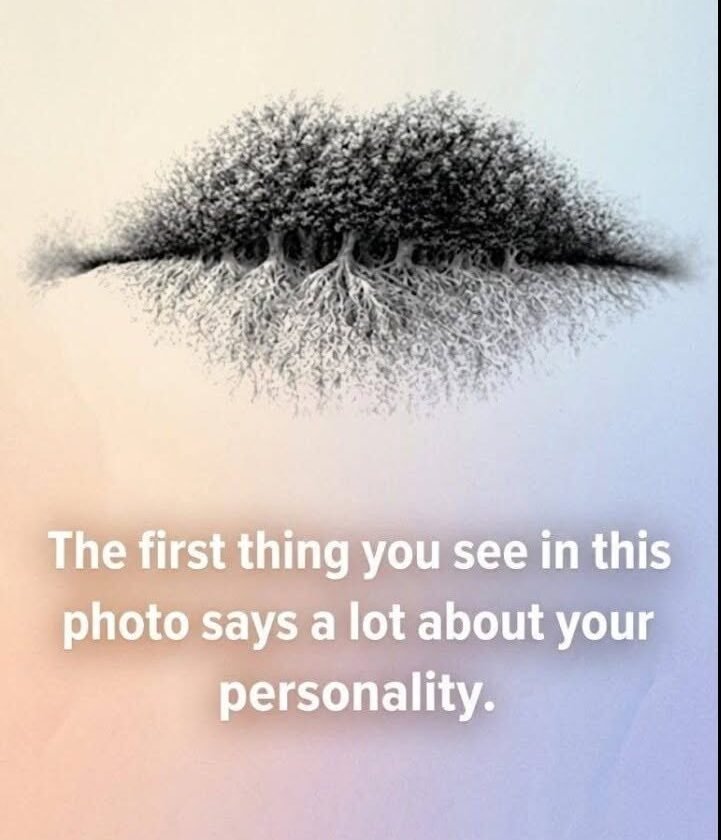
The headline “What Do You See First? A Simple Image That May Reveal Something About You” is a staple of social media scrolling. It usually features a clever, ambiguous optical illusion—like a sketch that looks like a duck to some people and a rabbit to others—and promises that your instant visual pick unlocks hidden secrets about your personality, your subconscious fears, or your hidden genius.
In psychological reality, these visual tests are fun, engaging parlor tricks rather than rigorous diagnostic tools.
Let’s look at how visual perception actually works in the human brain, and why these optical tests feel so uncanny.
The Science of “What You See First”
When your eyes take in an ambiguous image, your brain doesn’t just act like a passive camera. Instead, it acts like an active prediction engine, instantly scanning visual cues and matching them against past memories, experiences, and contextual patterns to make sense of what is in front of you.
Here is why different people notice different elements first:
-
Visual Priming and Attention Focus: If your eyes happen to land on the left side of an image first, or if your brain is currently primed to notice organic shapes over geometric patterns, you will lock onto one interpretation before the other.
-
Cognitive Flexibility (Gestalt Psychology): Your brain naturally tries to group visual elements into a unified whole (the Gestalt principle). In a well-designed illusion, two different configurations are equally valid, meaning your brain can “flip” back and forth between two interpretations depending on how you frame the lines.
-
The Forer Effect (Barnum Effect): Personality quizzes attached to these images usually rely on broad, flattering generalities that apply to almost anyone (e.g., “You are fiercely loyal to your friends, but sometimes hide your inner doubts”). When you read the description, your brain selectively focuses on the parts that fit you, making the test feel remarkably accurate.
The Takeaway
An online optical illusion can tell you a lot about how human visual perception and the cerebral cortex process patterns, but it cannot map your personality or predict your life choices.