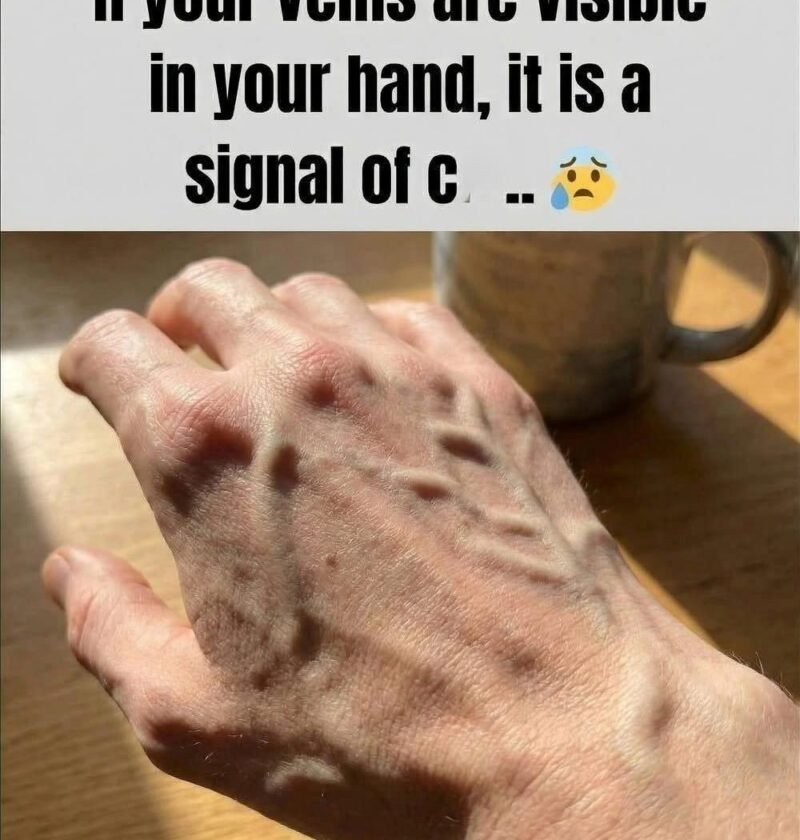
The headline “If your veins are visible, it means you are…” is a classic piece of internet health and beauty bait. Depending on the clickbait angle you encounter, prominent or visible veins are either framed as a terrifying sign of impending cardiovascular collapse, poor circulation, or—conversely—hailed as a secret indicator of extreme fitness or “low body fat.”
When you look down at your arms, hands, or legs and notice your veins standing out, your brain might jump to conclusions. However, vascular anatomy is far more straightforward and rarely points to a single dramatic cause.
Let’s separate internet sensationalism from the true physiological reasons why veins become visible.
Why Are Veins Visible? The Core Factors
Your veins are the blood vessels responsible for returning deoxygenated blood back to your heart. Whether they appear prominent or translucent near the surface of your skin depends on a combination of biology, anatomy, and environment:
1. Low Subcutaneous Fat and High Muscle Mass
-
The Reality: This is the most common reason athletic or lean individuals have prominent veins on their arms, hands, or legs.
-
Why it happens: Everyone has a layer of subcutaneous fat sitting directly underneath their skin. If you have a lower percentage of body fat, that insulating layer is thinner, allowing your underlying venous network to show through more clearly. Furthermore, when you exercise regularly, increased blood flow and muscle volume push veins closer to the surface.
2. Fair or Thin Skin Complexions
-
The Reality: Genetics dictate your skin thickness and natural pigmentation.
-
Why it happens: People with fair, pale, or very thin skin naturally have veins that show through much more easily because there is less pigment and tissue density masking the blue or greenish hue of the blood vessels beneath.
3. Temperature and Vasodilation
-
The Reality: Ambient temperature drastically changes how your blood vessels behave.
-
Why it happens: When you are warm (during a workout, on a hot summer day, or in a warm room), your body undergoes vasodilation—your blood vessels widen to release excess heat through the skin. This expansion makes veins swell and appear much more prominent. Conversely, in the cold, your vessels constrict to conserve core heat, making veins less visible.
4. Hormonal Shifts and Natural Aging
-
The Reality: As we age, our skin naturally loses collagen, elasticity, and subcutaneous fat, particularly on the hands and forearms. This thinning process makes aging hands look more “veiny.” Similarly, hormonal fluctuations during pregnancy can increase blood volume and cause temporary vascular changes.
When Visible Veins Indicate a Medical Issue
While surface veins are usually completely normal, there is a distinct clinical difference between prominent, healthy surface veins and diseased veins:
-
Varicose Veins: If your leg veins become twisted, bulging, swollen, and feel heavy, aching, or painful, it points toward chronic venous insufficiency. This happens when the tiny one-way valves inside your veins weaken, allowing blood to pool backward due to gravity rather than flowing smoothly up to the heart.
The Takeaway
Noticeable veins on your hands, arms, or legs are typically just a reflection of your genetics, skin thickness, body composition, or the temperature outside—not a mysterious medical emergency.