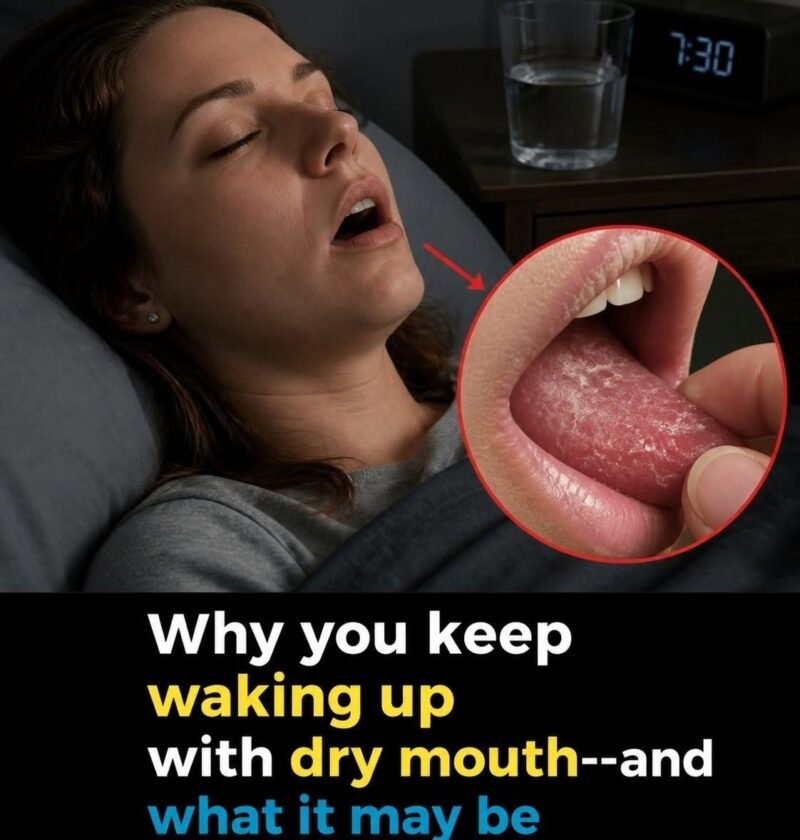
Waking up with a cotton-dry mouth—medically known as xerostomia—is a remarkably common morning nuisance. While it is frequently caused by harmless environmental factors, a persistent dry mouth can sometimes be your body’s way of signaling underlying physiological shifts, medication side effects, or health conditions.
1. You’re Breathing Through Your Mouth at Night
-
What it means: If your nasal passages are blocked due to allergies, a deviated septum, a sinus infection, or sleep apnea, you naturally switch to mouth breathing while sleeping. The constant stream of air drying out the oral mucosa overnight leaves you parched by morning.
-
Clues: Waking up with a sore throat, snoring, or a stuffy nose.
2. Mild Overnight Dehydration
-
What it means: Your body naturally slows down fluid intake overnight, but if you didn’t drink enough water the previous evening, or if the air in your bedroom is dry (due to heating or air conditioning), your salivary glands produce less saliva.
-
Clues: Feeling thirsty overall, dark urine upon waking, or sleeping in a low-humidity room.
3. Medication Side Effects
-
What it means: Hundreds of common prescription and over-the-counter medications list dry mouth as a primary side effect. This includes antihistamines, decongestants, blood pressure medications (like diuretics), antidepressants, and anxiety drugs.
-
Clues: The dryness started or worsened shortly after beginning a new medication.
4. Natural Age-Related Changes
-
What it means: As people age, salivary gland function can gradually decrease, and older adults are also statistically more likely to take multiple medications that compound the drying effect.
-
Clues: It happens consistently even when you are well-hydrated and breathing through your nose.
5. Blood Sugar Imbalances or Early Diabetes
-
What it means: Persistently high blood sugar pulls water from body tissues through osmotic diuresis (frequent urination), which leads to systemic dehydration. Furthermore, elevated glucose levels in the saliva itself can alter oral chemistry.
-
Clues: Accompanied by excessive thirst during the day, frequent nighttime bathroom trips, or unexplained fatigue.
6. Chronic Stress or Anxiety
-
What it means: High stress levels activate the sympathetic nervous system (“fight or flight”), which suppresses non-essential functions like digestion and saliva production. If you grind your teeth or experience high stress, your mouth may dry out overnight.
-
Clues: Waking up with a tight jaw, tension headaches, or vivid stress dreams.
7. Autoimmune Conditions (e.g., Sjögren’s Syndrome)
-
What it means: In some cases, chronic dry mouth is a sign of an autoimmune disorder where the body’s immune system mistakenly attacks its own moisture-producing glands (such as the salivary and tear glands).
-
Clues: Often accompanied by persistent dry eyes, joint pain, or extreme fatigue.
💧 Simple Ways to Find Relief:If your dry mouth is occasional, you can ease morning discomfort by using a bedside humidifier, drinking a glass of water right before bed and upon waking, practicing nasal breathing, and avoiding alcohol or caffeine late in the evening. However, if the dryness is chronic, painful, or accompanied by difficulty swallowing or talking, it’s worth mentioning to your doctor or dentist to rule out underlying causes.