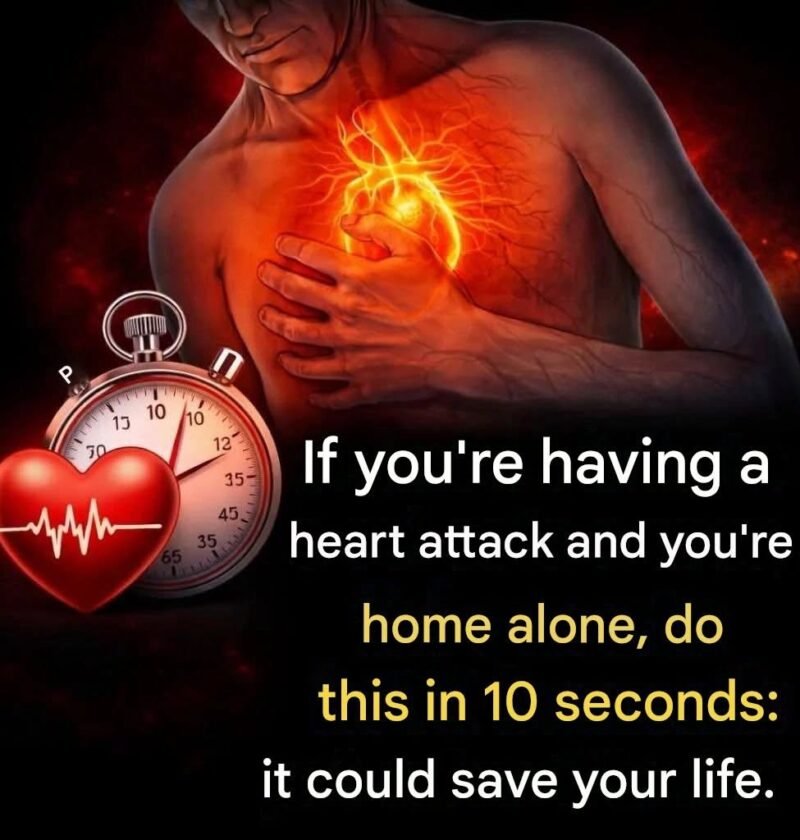
Viral internet posts often claim that performing aggressive “cough CPR” or drinking special mixtures can instantly stop a heart attack at home in a matter of seconds.
Medical experts and major health organizations (like the American Heart Association and British Heart Foundation) strongly debunk these claims. “Cough CPR” is an unproven myth for an active heart attack; a heart attack is a plumbing problem (a blocked blood vessel), and coughing cannot clear a clot or restart oxygen flow to starving heart muscle. Relying on tricks instead of real medical intervention wastes critical minutes.
If you or someone else experiences sudden signs of a heart attack (such as heavy chest pressure, shortness of breath, sudden cold sweats, or pain radiating down the arm), seconds do matter, but the correct steps are clear and life-saving:
What You Should Actually Do in the First Minutes
-
Call Emergency Services Immediately: Dial your local emergency number (like 911) right away. Do not try to drive yourself to the hospital, and do not wait to see if the pain passes on its own.
-
Stop and Rest: Sit or lie down immediately in a comfortable position. Stop whatever physical activity you are doing to minimize the heart’s oxygen demand, and try to stay as calm as possible.
-
Chew an Aspirin (If Safe): If you are not allergic to aspirin, do not have a bleeding disorder, and are not on conflicting medications, chewing and swallowing a regular or baby aspirin can help slow down blood clot formation while you wait for help. Chewing it allows it to enter the bloodstream faster than swallowing it whole.
-
Prepare for First Responders: Unlock your front door if possible, unlock your phone, and stay on the line with the emergency dispatcher, who can walk you through exact instructions.
If a person collapses, becomes completely unresponsive, and stops breathing normally, that has shifted into cardiac arrest (the heart’s electrical system has failed). At that point, bystanders must begin Hands-Only CPR (fast, hard chest compressions in the center of the chest) immediately until professional medical help or an AED arrives.