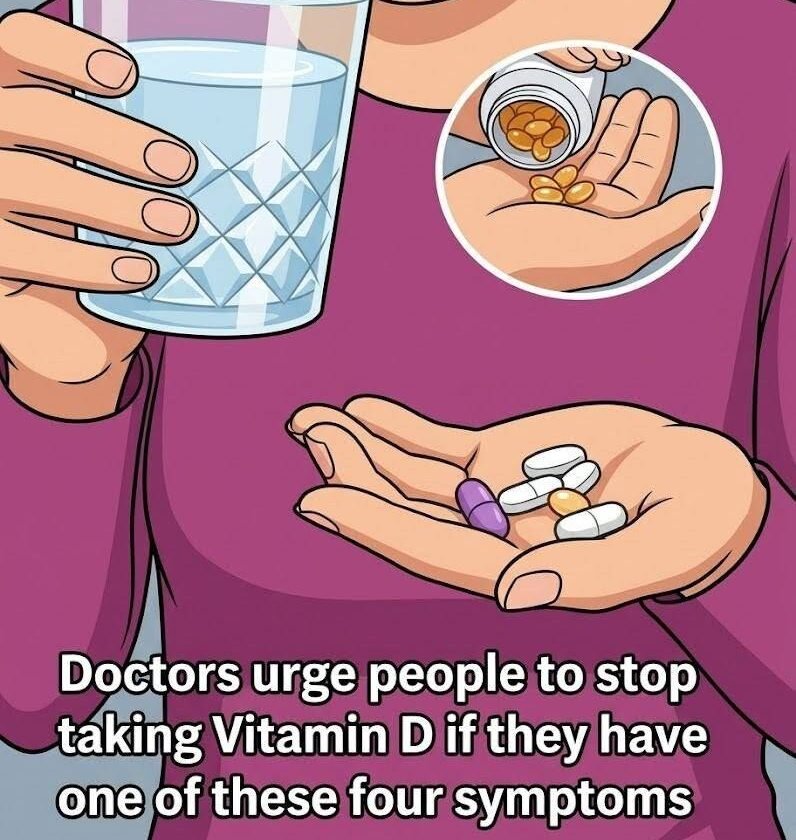
⚠️ “Stop Taking Vitamin D Immediately If You Have These 4 Symptoms” — What’s Actually True?
This headline is too alarmist. Vitamin D is important for bones, muscles and calcium regulation, and many people take it safely. The main concern is excessive vitamin D supplementation, which can cause dangerously high calcium levels. (nhs.uk)
🚨 Four symptoms that deserve attention
If you’re taking vitamin D and develop:
- Persistent nausea or vomiting
- Extreme thirst or frequent urination
- Marked weakness, fatigue or confusion
- Abdominal/side pain, especially with symptoms of kidney stones
these can occur when excessive vitamin D causes hypercalcemia (too much calcium in the blood). Severe toxicity can damage the kidneys and affect the heart. (nhs.uk)
Should you immediately stop?
Don’t automatically stop a prescribed vitamin-D treatment based on symptoms alone. Contact your doctor or pharmacist promptly. They may check your calcium, vitamin-D level and kidney function.
If testing confirms vitamin-D toxicity/high calcium, medical guidance may include stopping supplemental vitamin D until levels return to normal. (SPS)
💊 How much is too much?
For most adults, 4,000 IU (100 micrograms) per day is the general upper limit from all sources, unless a clinician has prescribed a higher dose for a specific medical reason. Higher doses are sometimes legitimately used for treating deficiency, but they should be medically supervised. (nhs.uk)
People with kidney disease, kidney stones, high blood calcium, sarcoidosis, or previous vitamin-D toxicity need particular caution. (nhs.uk)
Bottom line: Don’t stop vitamin D simply because you’ve experienced an ordinary symptom. But persistent vomiting, severe thirst/urination, confusion, significant weakness, or kidney-stone-type pain while taking high-dose vitamin D warrants prompt medical advice.