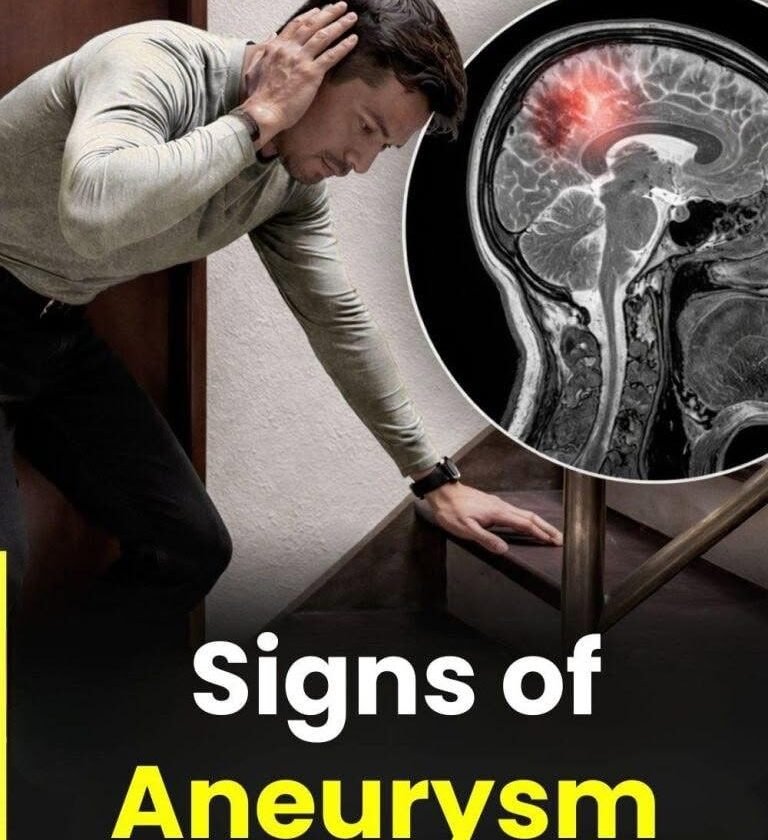
Recognizing the warning signs of a brain aneurysm is critical, as early detection—or immediate action during a rupture—can save a life.
While unruptured aneurysms often produce no symptoms at all unless they grow large enough to press on surrounding brain tissue or nerves, ruptured aneurysms trigger sudden, medical emergencies.
The following 12 critical warning signs span both unruptured and ruptured brain aneurysms:
Unruptured Aneurysm Signs (Pressure on Nerves/Tissues)
These symptoms occur when an unruptured aneurysm enlarges and begins pressing on nearby cranial nerves or brain structures.
-
Pain Above or Behind One Eye: A localized, sharp, or constant ache situated directly around or deep within one eye socket.
-
Blurred or Double Vision: A sudden distortion in visual acuity or seeing two images instead of one, caused by pressure on the optic nerves.
-
A Drooping Eyelid (Ptosis): Sudden weakness or drooping of one eyelid, which happens when the third cranial nerve is compressed.
-
A Dilated Pupil: One pupil appearing noticeably larger than the other, or failing to constrict properly when exposed to light.
-
Numbness or Weakness: A subtle, localized loss of sensation or muscle weakness, typically affecting one side of the face or body.
Ruptured Aneurysm Signs (Medical Emergencies)
When an aneurysm bursts, it causes bleeding into the brain (subarachnoid hemorrhage). These symptoms demand immediate emergency medical care (call 911 or local emergency services).
-
The “Thunderclap” Headache: A sudden, explosive, and excruciatingly severe headache often described as “the worst headache of my life,” which reaches peak intensity within seconds.
-
Stiff Neck: Severe rigidity or pain in the neck, making it difficult or impossible to touch your chin to your chest, caused by irritation from leaked blood.
-
Nausea and Vomiting: Sudden bouts of stomach sickness accompanying the severe headache due to rapidly rising pressure inside the skull.
-
Sensitivity to Light (Photophobia): Extreme discomfort or pain when looking at normal indoor or natural lighting.
-
Sudden Confusion or Altered Mental State: Rapid changes in cognitive function, disorientation, slurred speech, or trouble understanding language.
-
Seizures: A sudden, unprovoked electrical disturbance or convulsion in the brain resulting from the trauma of the rupture.
-
Loss of Consciousness: Fainting, unresponsiveness, or a sudden drop into a semi-comatose or comatose state.
When to Seek Help: If you or someone around you experiences a sudden, severe “thunderclap” headache—especially when paired with a stiff neck, vision changes, or vomiting—do not wait to see if it passes. Treat it as a medical emergency and get to an emergency room immediately.