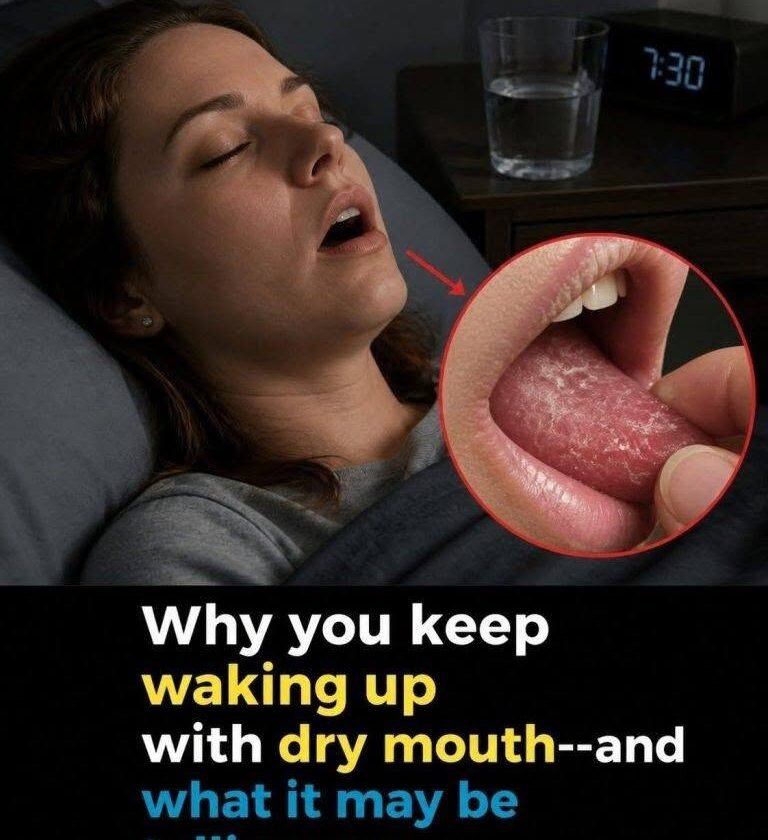
Waking up with a dry mouth? Here’s what your body might be telling you
Waking up with a dry mouth occasionally is common, but if it happens regularly, it may be a sign of something affecting your breathing, hydration, or saliva production.
Common causes of morning dry mouth
-
Sleeping with your mouth open: Often caused by nasal congestion, allergies, or habitual mouth breathing.
-
Dehydration: Not drinking enough fluids, sweating heavily, or losing fluids overnight can contribute.
-
Snoring or sleep apnea: Dry mouth can accompany disrupted breathing during sleep, especially if you snore loudly or wake up gasping.
-
Medication side effects: Some antihistamines, antidepressants, and other medicines can reduce saliva production.
-
High blood sugar: Persistent dry mouth accompanied by unusual thirst, frequent urination, or unexplained weight loss can warrant testing for diabetes.
-
Reduced saliva production: Certain medical conditions and treatments can affect the glands that produce saliva.
What you can do about it
-
Drink water regularly throughout the day and keep some bedside water handy.
-
Try sugar-free gum to stimulate saliva during the day.
-
If your nose is blocked, address the congestion safely.
-
Limit alcohol, smoking, and excessive caffeine.
-
Brush twice daily with fluoride toothpaste to protect your teeth.
These measures are consistent with NHS guidance.
NHS
+1
When should you see a doctor? If dry mouth persists for several weeks, interferes with eating or swallowing, or occurs with excessive thirst and frequent urination, arrange a medical evaluation. Do not stop prescribed medication without medical advice.
NHS
+1
To help narrow down the likely cause, you can identify possible causes of my dry mouth or learn the signs of diabetes.