When the heart is struggling, distressed, or facing a critical blockage, it rarely stays entirely quiet. While some cardiac symptoms are dramatic, others develop gradually or mimic everyday ailments, leading many people to overlook them.
Seven critical signs indicate that a heart may be in serious danger and require medical evaluation:
1. Unfamiliar Chest Pressure, Squeezing, or Heaviness
-
What it feels like: Often described as an elephant sitting on the chest, a tight band wrapping around the torso, or a heavy squeezing sensation in the center or left side of the chest. It may last for more than a few minutes or continuously fade and return.
-
Why it’s dangerous: This classic sign of restricted blood flow to the heart muscle (angina or a heart attack) means the heart is starved of oxygen.
2. Radiating Pain Traveling to the Arms, Jaw, Neck, or Back
-
What it feels like: Discomfort or a dull ache that starts in the chest and travels outward down one or both arms (frequently the left), or creeps upward into the jaw, throat, upper back, or shoulders.
-
Why it’s dangerous: Heart nerves share pathways with nerves in the upper body. When the heart is in distress, the brain can misinterpret the source, projecting the pain outward to surrounding areas.
3. Sudden, Unexplained Shortness of Breath
-
What it feels like: Finding yourself completely winded or struggling to catch your breath after performing light activities you used to handle with ease—such as walking up a flight of stairs or carrying groceries. Some people also experience breathlessness while lying flat.
-
Why it’s dangerous: When the heart cannot pump blood efficiently, fluid can back up into the lungs, or the body fails to receive adequate oxygenation, signaling heart failure or an ischemic event.
4. Profound, Overwhelming Fatigue
-
What it feels like: A deep, debilitating exhaustion that hits suddenly or lingers for days, making simple daily tasks feel impossible. Crucially, this tiredness does not improve significantly with a good night’s sleep.
-
Why it’s dangerous: When cardiac output drops, the body diverts vital blood flow away from non-essential muscles and toward core organs, causing profound weakness and systemic fatigue. (This is a particularly common warning sign in women).
5. Dizziness, Lightheadedness, or Fainting Spells
-
What it feels like: A sudden feeling of unsteadiness, wooziness, or actual loss of consciousness (syncope) that occurs without an obvious trigger like standing up too fast.
-
Why it’s dangerous: This happens when the heart is beating too fast, too slow, or erratically, causing a sudden drop in blood pressure and starving the brain of proper blood flow.
6. Sudden Cold Sweats, Nausea, or Indigestion-Like Pain
-
What it feels like: Breaking out into a cold, clammy sweat for no apparent reason, or experiencing sudden nausea, vomiting, or a burning sensation in the upper abdomen that feels like severe heartburn.
-
Why it’s dangerous: These “atypical” symptoms are the body’s acute stress response to a major cardiac event. They are frequently mistaken for digestive issues, which can dangerously delay emergency care.
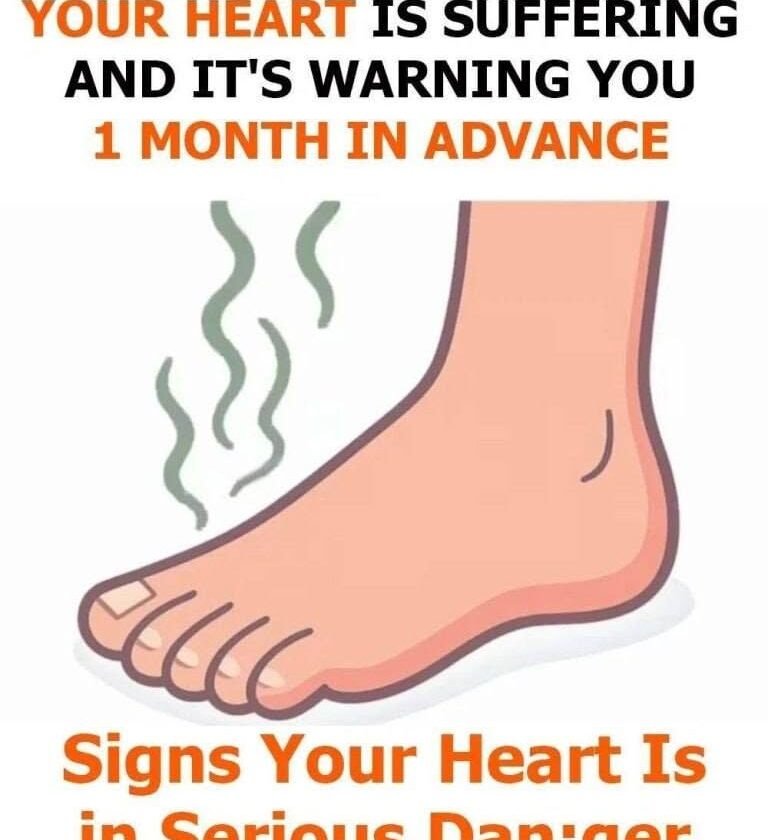
7. Noticeable Swelling in the Feet, Ankles, or Legs
-
What it feels like: Gradual puffiness or swelling in the lower extremities. If you press a finger into the skin and it leaves an indentation that stays for a few moments, it indicates fluid retention.
-
Why it’s dangerous: Known as edema, this can indicate that the heart is failing to pump blood forward effectively, causing fluid to back up in the circulatory system and pool in the lower body.
When to seek emergency help: If you or someone nearby experiences sudden, intense chest pressure, severe shortness of breath, or pain radiating to the jaw or arm that does not resolve within a few minutes, call emergency services immediately. Do not attempt to drive yourself to the hospital.