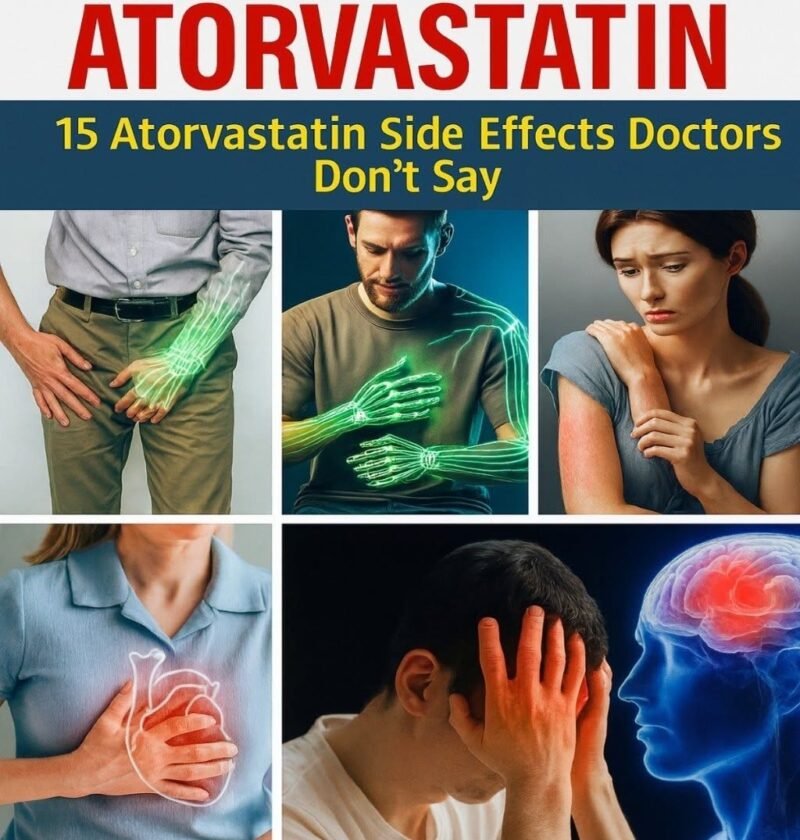
Atorvastatin Side Effects: 15 Things You Should Know
Atorvastatin is a widely used statin that lowers LDL (“bad”) cholesterol and helps reduce the risk of heart attack and stroke. Most people tolerate it well, but side effects can occur.
15 Possible Side Effects or Reactions
- Muscle aches or pain
- Muscle weakness
- Muscle cramps or spasms
- Joint pain
- Diarrhea
- Nausea or stomach discomfort
- Headache or dizziness
- Tiredness
- Trouble sleeping
- Increased blood sugar
- Changes in liver blood tests
- Memory problems or confusion — reported rarely
- Tendon problems — reported rarely
- Peripheral nerve problems — reported rarely
- Severe muscle breakdown (rhabdomyolysis) — very rare but potentially serious
Which Symptoms Need Attention?
Call your doctor promptly if you develop unexplained muscle pain, tenderness, or weakness, particularly with unusual tiredness or fever. Dark urine, yellow skin or eyes, loss of appetite, or significant upper-abdominal pain can also signal a serious problem.
It’s also important not to assume every symptom is caused by atorvastatin. A large 2026 analysis found that many symptoms commonly attributed to statins occurred at similar rates with placebo, while confirmed risks such as muscle problems and small increases in blood sugar were uncommon.
Important: Don’t stop atorvastatin on your own. If you think you’re experiencing side effects, speak with your doctor or pharmacist. They can determine whether the medicine is responsible and whether your treatment should be adjusted.
Bottom line: Atorvastatin has real but generally uncommon serious risks, and its cardiovascular benefits can be substantial. Knowing the warning signs is more useful than fearing a long list of “hidden dangers.”