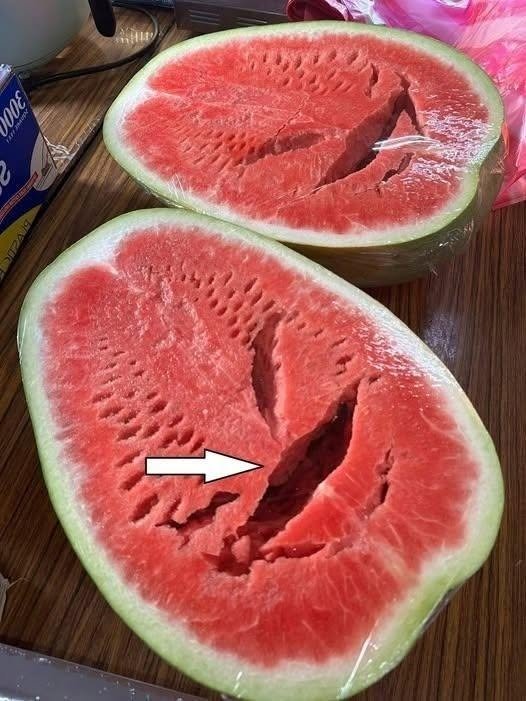
Cracks inside a watermelon: Should you stop eating it?
Finding cracks inside a watermelon can be surprising, but cracks do not automatically mean the watermelon is unsafe to eat. What matters is how the flesh looks, smells, and feels, and how the fruit was stored.
There are several possible explanations, including a natural condition called hollow heart, uneven growth, or spoilage.
What causes cracks inside a watermelon?
A natural growing condition that creates gaps or cracks inside the flesh. If the flesh is otherwise fresh and firm, it is generally safe to eat.
When should you throw the watermelon away?
Do not eat it if you notice:
-
A sour, rotten, or fermented smell.
-
Slimy, mushy, or unusually discolored flesh.
-
Foaming, bubbling, or suspicious liquid.
-
Signs that it was stored unsafely, particularly after being cut and left unrefrigerated for too long.
Spoiled food should be discarded. Also, harmful bacteria can sometimes be present without changing the food’s smell or appearance, so proper handling matters.
For safety, wash the outside of the watermelon under running water before cutting, use a clean knife and cutting board, and refrigerate cut pieces promptly. Do not leave cut watermelon at room temperature for more than two hours—or more than one hour in temperatures above 32°C (90°F).
Bottom line: Internal cracks alone are not a reason to panic or throw away a fresh watermelon. Check its condition and storage history instead. If you are unsure whether it has spoiled, the safer choice is to discard it.