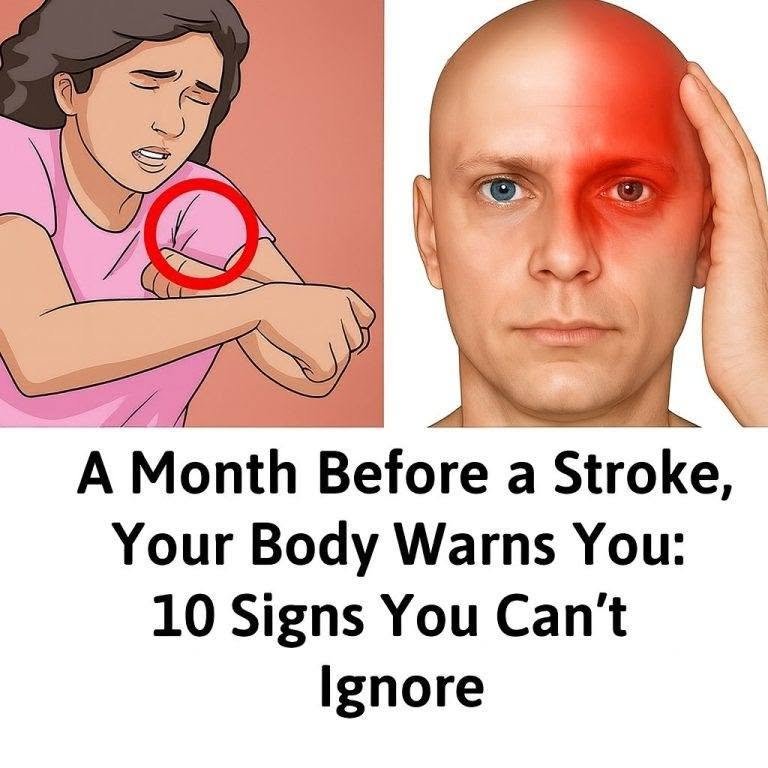
“A month before a stroke, your body warns you” — what the evidence really says
There isn’t a reliable set of 10 symptoms that predict a stroke exactly one month in advance. A stroke can occur suddenly, and some warning symptoms may happen only minutes or hours beforehand.
However, transient ischemic attacks (TIAs) can cause stroke-like symptoms that disappear. A TIA is a medical emergency because it can be a warning that a stroke may follow.
10 symptoms that should never be ignored
-
Sudden weakness or numbness, especially on one side of the body.
-
Facial drooping or an uneven smile.
-
Sudden difficulty speaking or slurred speech.
-
Sudden difficulty understanding speech.
-
Sudden vision loss or major visual disturbance, in one or both eyes.
-
Sudden dizziness or loss of balance.
-
Sudden difficulty walking or coordinating movements.
-
Sudden severe headache without an obvious cause.
-
Sudden confusion or difficulty thinking clearly.
-
Sudden difficulty swallowing, particularly when accompanied by other neurological symptoms.
🚨 Think FAST
F — Face: Is one side drooping?
A — Arms: Can both arms be raised and kept up?
S — Speech: Is speech suddenly strange or slurred?
T — Time: Call your local emergency service immediately.
Do not wait to see whether symptoms disappear. Even if they last only a few minutes and then resolve, they could represent a TIA and require urgent assessment.
If possible, note when the symptoms started or the last time the person was known to be normal. This information can be important for treatment decisions.
What about symptoms weeks beforehand?
Risk factors such as high blood pressure, smoking, diabetes, high cholesterol, atrial fibrillation, and previous TIA or stroke can increase stroke risk, but they don’t reliably produce a recognizable “one-month warning.”
Bottom line: Don’t rely on a countdown of warning signs. Sudden stroke-like symptoms are an emergency, even if they completely disappear.