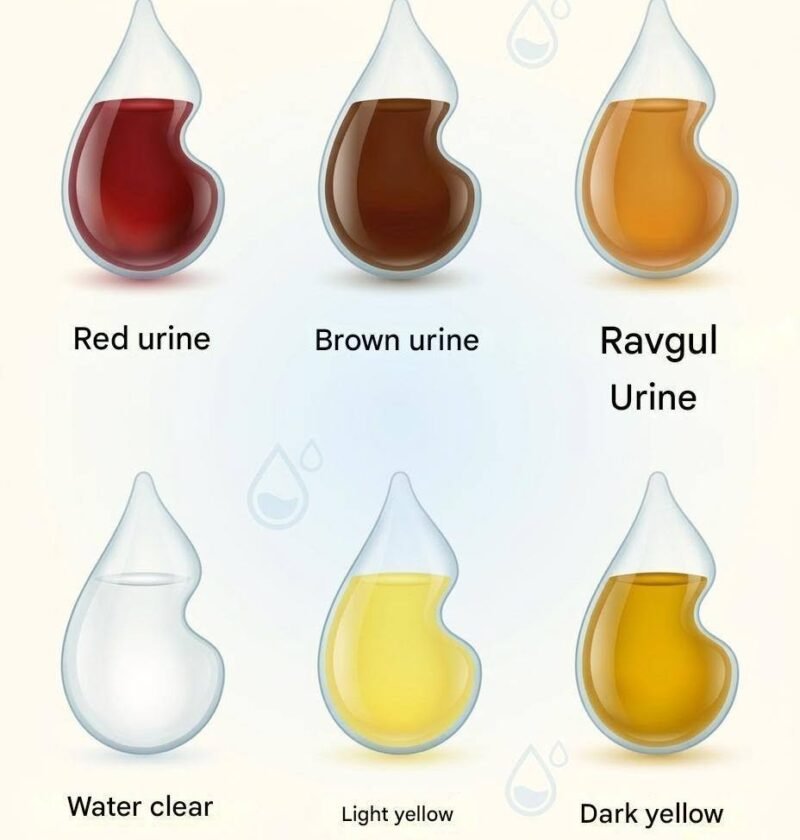
Just like your nails or sleep patterns, the color of your urine is a built-in diagnostic tool. Your body naturally produces a pigment called urochrome (or urobilin) as it breaks down old red blood cells. How concentrated that pigment appears gives you a direct look at your hydration, diet, and internal health.
1. The Hydration Spectrum: Pale Yellow to Amber
-
Pale Straw to Transparent Yellow (The Sweet Spot): This is the gold standard. It means you are properly hydrated—your body has enough fluids to flush out waste without diluting your essential electrolytes.
-
Completely Clear: While it sounds healthy, completely clear urine usually means you are overhydrated. Drinking excessive amounts of water can dilute your body’s vital salt and electrolyte levels.
-
Dark Yellow, Honey, or Amber: This is a clear warning sign of dehydration. Your body is conserving water, making the urochrome pigment highly concentrated. Time to drink some water.
2. The Diet and Supplement Shift: Neon, Orange, or Green
Not every unusual color means trouble. Often, what you eat or take acts as natural food dye:
-
Bright Neon Yellow: Usually triggered by B-complex vitamins (especially B2/riboflavin). Your body absorbs what it needs and flushes out the fluorescent excess, which is completely harmless.
-
Pink or Red: If you haven’t eaten beets, blackberries, or rhubarb recently, a pink or reddish hue can indicate blood in the urine (hematuria), which warrants a call to a doctor.
-
Blue, Green, or Dark Orange: Certain medications (like specific UTI treatments or anti-nausea drugs) or foods like asparagus can temporarily tint your urine surprising shades.
3. Red-Flag Colors That Need Medical Attention
If a strange color doesn’t clear up after drinking water or stopping a specific food, it can point to an underlying medical issue:
-
Cola-Colored or Deep Brown: Severe dehydration can cause this, but if it persists after rehydrating, it can indicate a liver or bile duct issue (where bile pigments end up in your urine instead of your digestive tract).
-
Cloudy or Murky: Cloudy urine combined with a strong odor, burning, or pelvic pain is a classic sign of a urinary tract infection (UTI) or kidney stones.