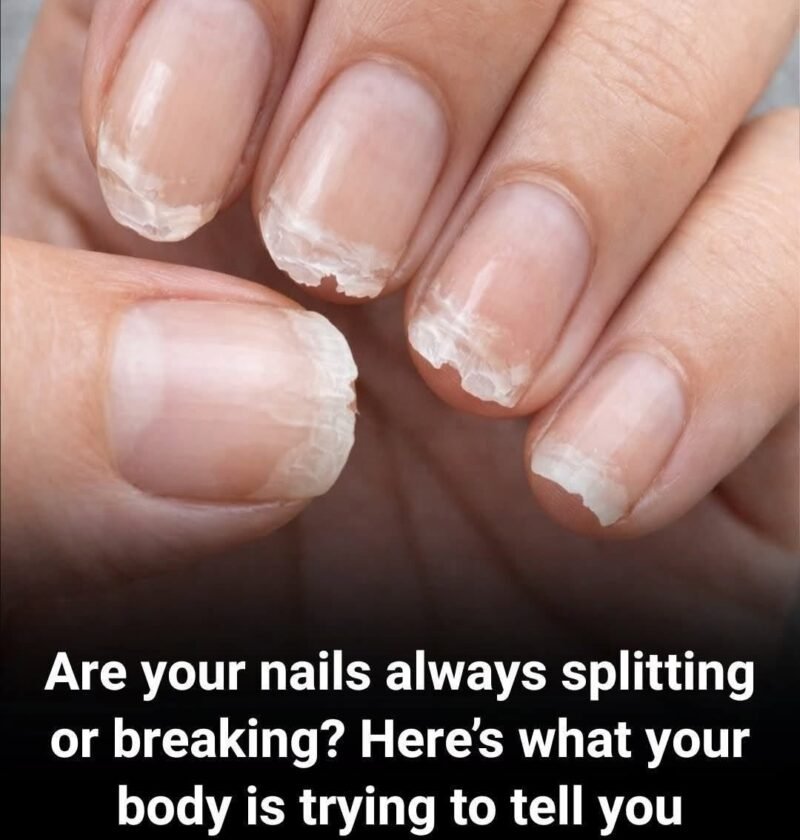
When your nails start splitting, peeling, cracking, or breaking at the slightest bump, it’s easy to blame it on too much hand washing or winter weather. But your nails are actually little windows into your internal health. Because nail cells grow relatively slowly, they often reflect chronic internal habits, nutritional gaps, or underlying shifts well before other symptoms appear.
What Your Brittle Nails Might Be Telling You
-
Nutritional Shortfalls (The Most Common Culprit):
-
Biotin (Vitamin B7): Essential for building keratin, the protein that makes up your nails. A deficiency often leads to soft, easily split nails.
-
Iron & Ferritin: Low iron stores (anemia) reduce oxygen delivery to your nail beds, resulting in brittle nails or even nails that curve upward like a spoon (koilonychia).
-
Protein: Since nails are literal sheets of keratin protein, a diet chronically low in overall protein will yield weak, slow-growing structures.
-
-
Chronic Moisture Overload (or Dehydration):
-
It sounds counterintuitive, but frequent wetting and drying—think constant hand washing, dishwashing without gloves, or swimming—causes the nail cells to swell and shrink repeatedly. This breaks down the structural bonds, leading to peeling layers.
-
Conversely, low internal water intake leaves the nail plate dry, inflexible, and prone to snapping.
-
-
Harsh Chemical Exposure:
-
Frequent use of acetone-based nail polish removers, gel/acrylic manicure removals, and harsh household cleaning products strip away the natural protective oils on the nail surface.
-
-
Underlying Health Conditions:
-
Thyroid Disorders: An underactive thyroid (hypothyroidism) slows down cellular metabolism, which frequently translates to dry, brittle, slow-growing hair and nails.
-
Circulatory Issues: Poor blood flow to your extremities can starve the nail matrix of the nutrients it needs to build a strong foundation.
-
How to Build Back Stronger Nails
-
Targeted Nutrition: Focus on lean proteins, iron-rich foods (spinach, lentils, red meat), and healthy fats. Talk to a doctor before taking high-dose supplements like biotin, as excess levels can sometimes interfere with lab test results.
-
The “Inner Moisture” Rule: Drink adequate water, and lock in external moisture by applying a heavy hand cream or cuticle oil containing lanolin, shea butter, or squalane immediately after washing your hands.
-
Protect Your Hands: Always wear rubber gloves when washing dishes or handling cleaning chemicals.
-
Gentle Upkeep: File your nails in one direction rather than sawing back and forth, which creates micro-tears that lead to splitting.