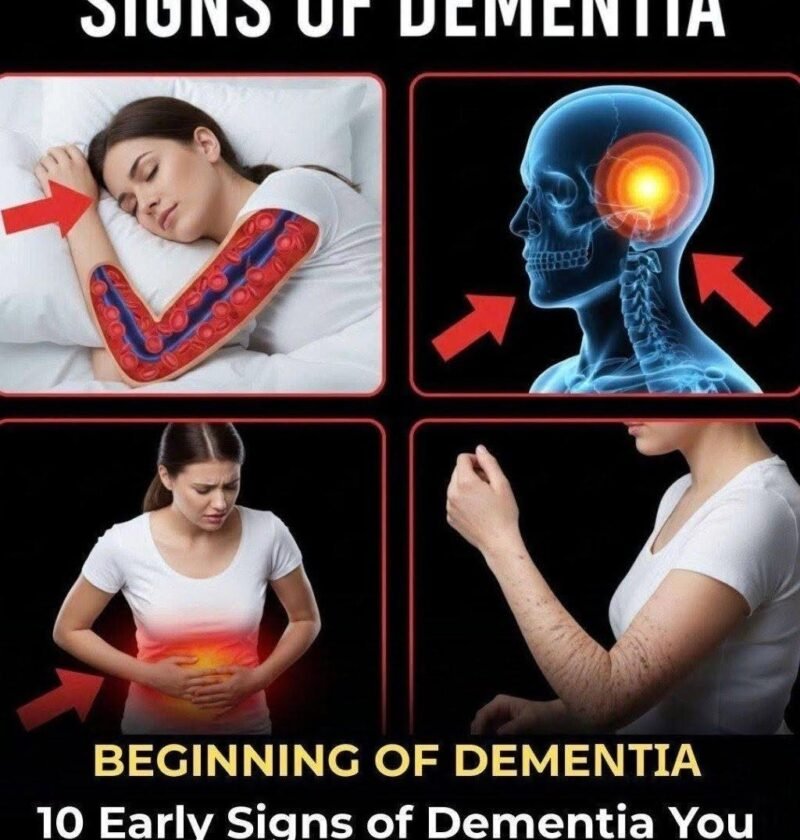
10 early signs of dementia you isn’t a normal or inevitable part of aging shouldn’t ignore
Dementia isn’t a normal or inevitable part of aging. It describes a decline in memory, thinking, language, behavior, or the ability to manage everyday activities that interferes with daily life. There are many possible causes, some of which are treatable, so noticing changes early is important.
10 possible warning signs
-
Memory problems that disrupt daily life
Repeatedly asking the same questions, forgetting recently learned information, or relying increasingly on reminders. -
Difficulty with familiar tasks
Trouble preparing a familiar meal, managing finances, using appliances, or following a routine previously handled easily. -
Problems finding words or following conversations
Frequently losing track of a conversation or using unusual words because the correct word can’t be recalled. -
Getting confused about time or place
Losing track of dates, seasons, or locations, or becoming unexpectedly disoriented in familiar surroundings. -
Difficulty judging distance or navigating
New problems with judging space, recognizing objects, or getting around familiar places can occur with some types of dementia. -
Misplacing things and being unable to retrace steps
It’s normal to occasionally lose keys. More concerning is repeatedly putting things in unusual places and being unable to work backward to find them. -
Increasing difficulty with planning and problem-solving
Problems managing bills, medications, appointments, or other tasks that require several steps. -
Withdrawal from usual activities
Someone may stop participating in hobbies or social activities because they’re struggling with changes in thinking or confidence. -
Changes in mood or personality
Unusual anxiety, irritability, apathy, suspiciousness, or personality changes can sometimes accompany cognitive decline. -
Declining judgment or safety awareness
For example, unusual financial decisions, unsafe driving, or vulnerability to scams that are markedly different from the person’s previous behavior