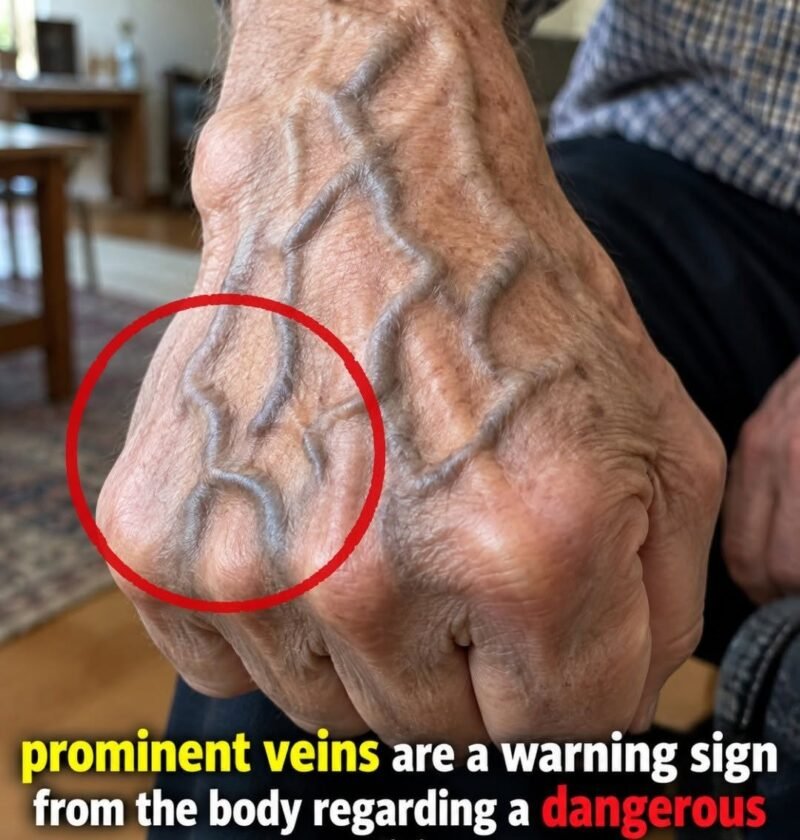
If you’re seeing the headline “Visible Blue Veins After 60: What Your Blood Flow Is Screaming,” it is much more dramatic than the medical reality.
Why veins become more visible with age
Visible blue or greenish veins are very common as people get older. Several normal changes contribute:
-
Thinner skin: Aging reduces skin thickness and collagen, making veins easier to see.
-
Less fat beneath the skin: Reduced subcutaneous tissue can make superficial veins more prominent.
-
Changes in vein walls and valves: These can make some veins, particularly in the legs, more noticeable.
-
Sun exposure and genetics: Both can influence how visible veins are.
Visible veins by themselves do not mean that your blood circulation is poor or that your blood is “not flowing properly.”
When visible veins deserve medical attention
Especially in the legs, seek medical advice if prominent veins are accompanied by:
-
Swelling, heaviness, aching, or itching
-
Skin discoloration or ulcers around the ankle
-
A vein that becomes suddenly painful, red, warm, or hard
-
Sudden swelling of one leg, particularly with pain
Sudden leg swelling accompanied by chest pain, difficulty breathing, coughing up blood, or fainting is an emergency, because a blood clot can travel to the lungs.
So, if your only change is that the veins on your hands, arms, or legs have become more visible after 60, that is often a normal consequence of aging rather than a warning that your circulation is failing.