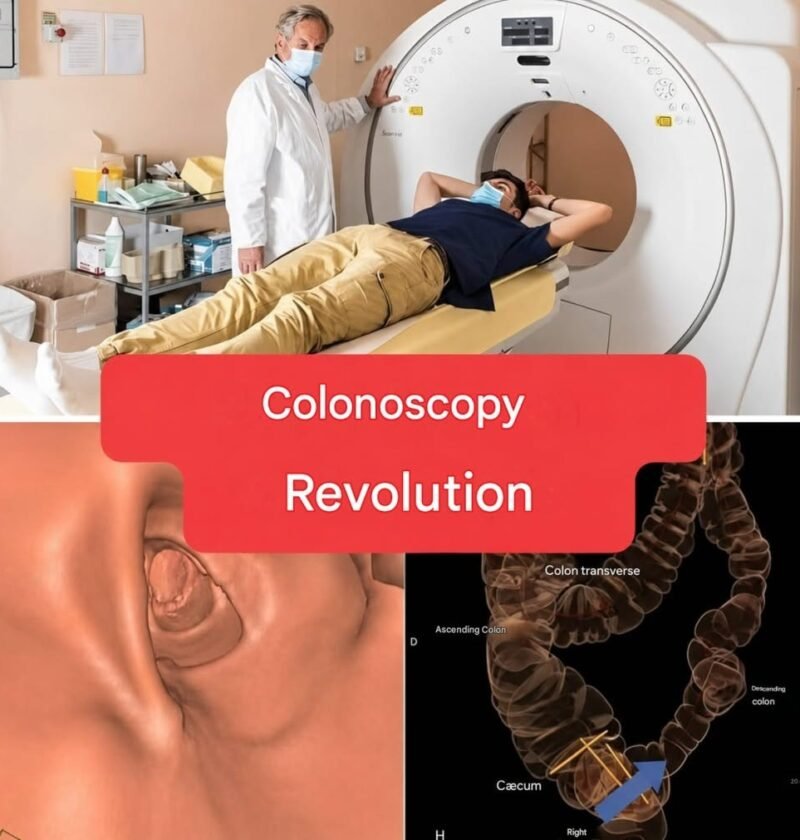
New Method Could Make Colon Examination Less Invasive
Imagine checking the inside of your colon without having a traditional flexible scope inserted through the rectum. Newer technologies are being developed to make colorectal screening more comfortable and accessible.
One promising approach is colon capsule endoscopy—a small camera capsule that is swallowed and travels through the digestive tract while taking images.
How Does It Work?
📷 You swallow a capsule containing tiny cameras.
📡 The capsule captures images as it moves through the digestive tract.
💻 The images are recorded and reviewed for abnormalities such as polyps or other lesions.
Researchers are also investigating artificial intelligence to help identify suspicious polyps in capsule images. Early 2026 research suggests AI-assisted capsule examination has potential, but additional prospective studies are still needed before it can be considered a routine replacement for conventional colonoscopy.
Is Colonoscopy Obsolete?
No—not yet.
Traditional colonoscopy remains especially valuable because doctors can not only see abnormalities but also remove precancerous polyps and take biopsies during the same procedure. Current gastroenterology guidance continues to regard colonoscopy as the strongest colorectal-cancer screening option.
A capsule examination also doesn’t necessarily eliminate bowel preparation, and if it finds something that needs treatment, a conventional colonoscopy may still be required.
Another Non-Invasive Option
For some average-risk adults, stool-based tests such as the fecal immunochemical test (FIT) can screen for signs of colorectal cancer without a procedure. However, a positive result generally needs to be followed by a colonoscopy.
Bottom line: The future of colorectal screening is becoming increasingly non-invasive, with capsule cameras, AI-assisted detection, and at-home stool tests all being explored or used. But for now, these options complement rather than completely replace colonoscopy.