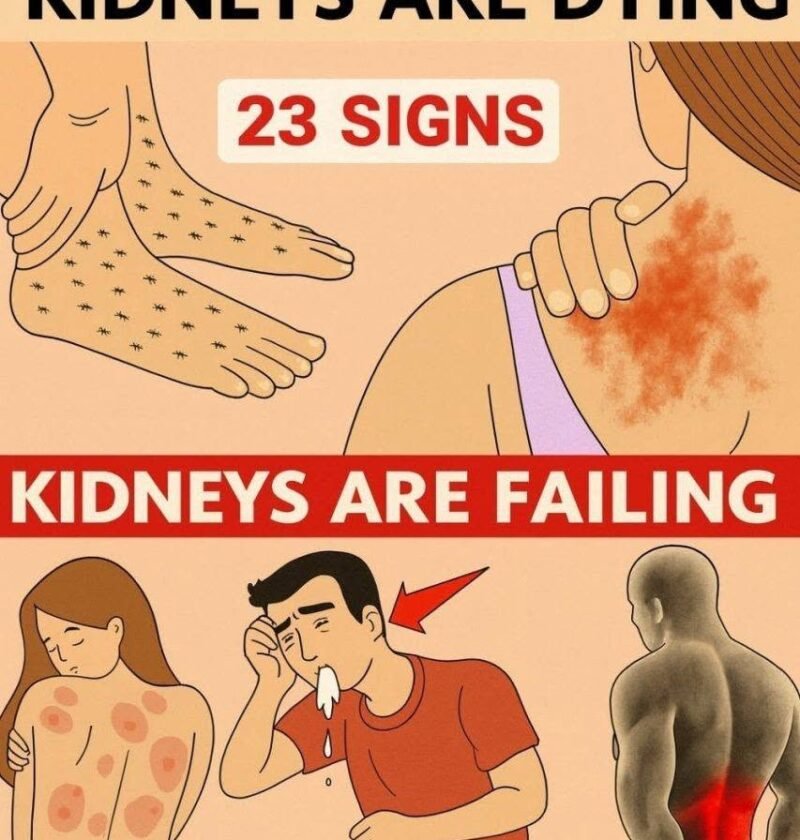
23 Strange Signs Your Kidneys Might Be in Trouble
This headline is a little misleading because many kidney problems—especially early chronic kidney disease (CKD)—cause no noticeable symptoms at all. Testing is often the only way to detect kidney disease early.
That said, these symptoms can occur with kidney disease:
- Foamy or unusually bubbly urine — can indicate protein in the urine.
- Blood in the urine — pink, red, or cola-colored urine should be evaluated.
- Urinating more frequently, especially at night.
- Urinating less than usual.
- Swollen ankles, feet, legs, hands or face from fluid retention.
- Puffy eyes, particularly in the morning.
- Persistent fatigue or weakness.
- Difficulty concentrating or “brain fog.”
- Trouble sleeping.
- Dry, itchy skin.
- Muscle cramps, especially in the legs.
- Poor appetite.
- Nausea or vomiting.
- Unintentional weight loss.
- Shortness of breath, particularly with advanced disease or significant fluid buildup.
- Changes in how urine looks or smells.
- Persistent thirst.
- Changes in blood pressure, particularly difficult-to-control high blood pressure.
- Numbness or tingling in the extremities.
- Swelling that leaves sock or shoe marks.
- A metallic or unusual taste in the mouth.
- Urine-like/ammonia-like breath odor in advanced kidney disease.
- Pain or difficulty with urination—although this is often caused by urinary tract problems rather than CKD itself.
⚠️ Don’t assume these symptoms mean kidney disease
Fatigue, swelling, frequent urination, itching and muscle cramps have many possible causes. A symptom by itself cannot diagnose kidney disease.
The particularly important point is that foamy urine that happens repeatedly or visible blood in the urine deserves medical evaluation. Blood can also result from infections, kidney stones and other conditions.
🩺 How do you actually check your kidneys?
Two simple tests are especially important:
- eGFR: a blood test that estimates how well your kidneys filter waste.
- uACR (urine albumin-to-creatinine ratio): detects albumin/protein leaking into the urine.
If you have diabetes, high blood pressure, heart disease, or a family history of kidney failure, regular kidney testing is particularly important.