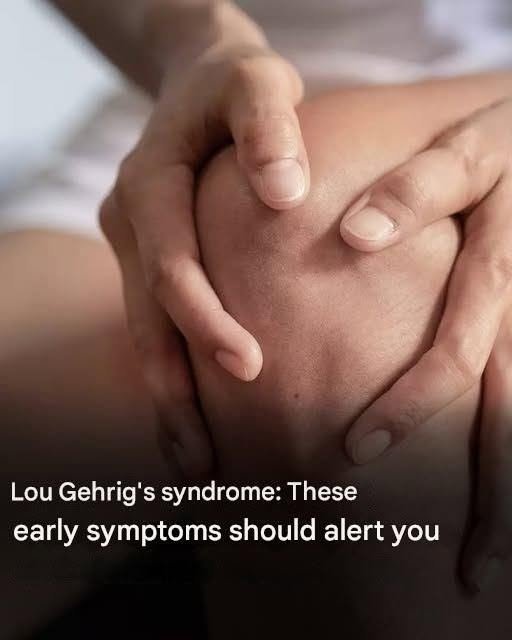
Lou Gehrig’s disease: early symptoms to know
Lou Gehrig’s disease, medically called amyotrophic lateral sclerosis (ALS), is a progressive disease affecting nerve cells that control voluntary muscles. Early symptoms can be subtle and vary considerably from person to person. nhs.uk+1
Common early signs include:
-
Muscle weakness — often beginning in one hand, arm, leg, or foot.
-
Tripping or difficulty walking — including a developing foot drop.
-
Dropping objects or difficulty with buttons, writing, or other fine hand movements.
-
Muscle twitching (fasciculations).
-
Muscle cramps or stiffness.
-
Muscle wasting in an affected area.
-
Slurred or increasingly difficult speech when muscles involved in speaking are affected.
-
Difficulty swallowing in some forms of ALS.
-
Increasing difficulty with everyday movements as weakness progresses.
-
Fatigue associated with muscle weakness. nhs.uk+1
Important: these symptoms don’t automatically mean ALS
Many much more common conditions can cause weakness, twitching, cramps, numbness, or difficulty walking. ALS is diagnosed through a neurological evaluation and appropriate testing; there isn’t a single symptom that confirms it.
If weakness is progressively worsening, especially if it is accompanied by muscle wasting, persistent twitching, speech changes, or swallowing difficulty, a doctor—often a neurologist—should evaluate it. Sudden weakness, particularly on one side, is different and can be a sign of stroke requiring emergency treatment.