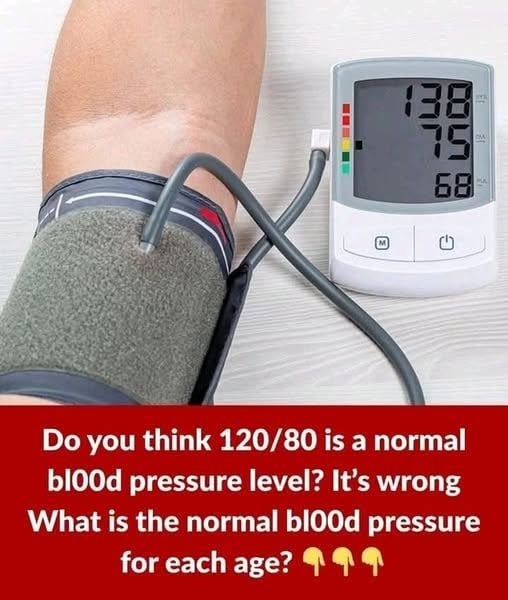
What Is Normal Blood Pressure at Each Age?
A common misconception is that normal blood pressure has a different target for every age. For most adults, the basic categories are based on the blood-pressure reading itself, not simply age.
| Age | General blood-pressure guidance |
|---|---|
| Children | Normal values vary considerably with age, sex, and height; pediatric charts are used rather than one fixed number. |
| 18–39 | Generally, below 120/80 mmHg is considered normal. |
| 40–59 | Generally, below 120/80 mmHg is considered normal. |
| 60–79 | Generally, below 120/80 mmHg is considered normal, although treatment targets may be individualized. |
| 80+ | Targets may be individualized based on overall health, frailty, medications, and other conditions. |
What do the numbers mean?
-
Systolic pressure — the top number — measures pressure when the heart contracts.
-
Diastolic pressure — the bottom number — measures pressure when the heart relaxes.
For adults, readings are generally interpreted approximately as:
-
Normal: less than 120/80
-
Elevated: 120–129 systolic and less than 80 diastolic
-
High blood pressure: 130/80 or higher, depending on the guideline being used
One unusually high or low reading doesn’t necessarily mean you have a blood-pressure problem. Measurements can change with stress, activity, caffeine, illness, medications, and even how the cuff is positioned.
🚨 When to get urgent help
A reading around 180/120 mmHg or higher requires particular attention. If it occurs with symptoms such as chest pain, difficulty breathing, severe headache, confusion, weakness/numbness, vision changes, or difficulty speaking, seek emergency medical care.
For an individual, the appropriate blood-pressure goal can depend on their medical history, so persistent abnormal readings should be discussed with a healthcare professional.