-
Diabetes can cause symptoms that become particularly noticeable at night, but none of these signs alone proves that you have diabetes. The only way to diagnose diabetes is with appropriate blood testing.
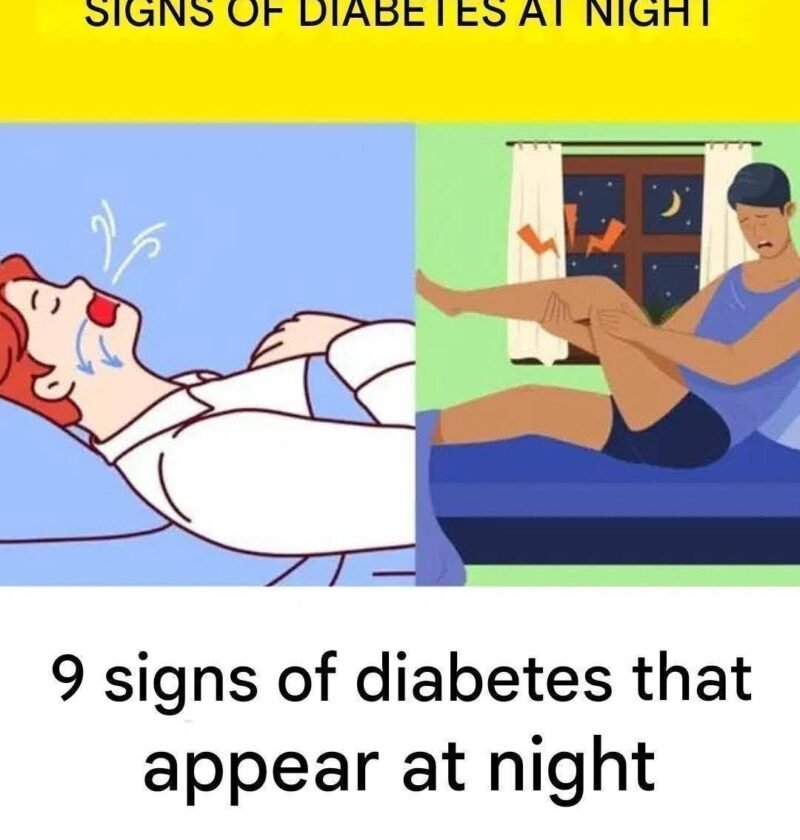
9 nighttime signs that can occur with diabetes
-
Frequent urination at night — High blood glucose can cause the kidneys to remove extra glucose through urine, increasing urination.
-
Strong thirst — Increased urination can lead to fluid loss and make you unusually thirsty.
-
Night sweats — In people taking insulin or certain diabetes medicines, low blood sugar (hypoglycemia) can cause sweating during sleep.
-
Restless or disrupted sleep — Repeated urination, thirst, or blood-glucose fluctuations can interfere with sleep.
-
Tingling or burning feet — Diabetic nerve damage can cause uncomfortable sensations that may be more noticeable at night.
-
Leg cramps — These can occur for many reasons and aren’t specific to diabetes.
-
Dry or itchy skin — Dehydration associated with high blood glucose can contribute to dry skin.
-
Blurred vision — Changes in blood glucose can temporarily affect the eye’s focusing ability.
-
Slow-healing cuts or sores — Diabetes can impair circulation and immune function, although this isn’t necessarily noticed only at night.
When to get tested
If you’re experiencing several of these symptoms—particularly frequent nighttime urination, excessive thirst, unexplained weight loss, or persistent fatigue—ask a healthcare professional about a blood-glucose test such as fasting glucose or HbA1c.
If you have diabetes and develop confusion, severe weakness, vomiting, difficulty breathing, or very high or very low blood sugar, seek urgent medical care.
-