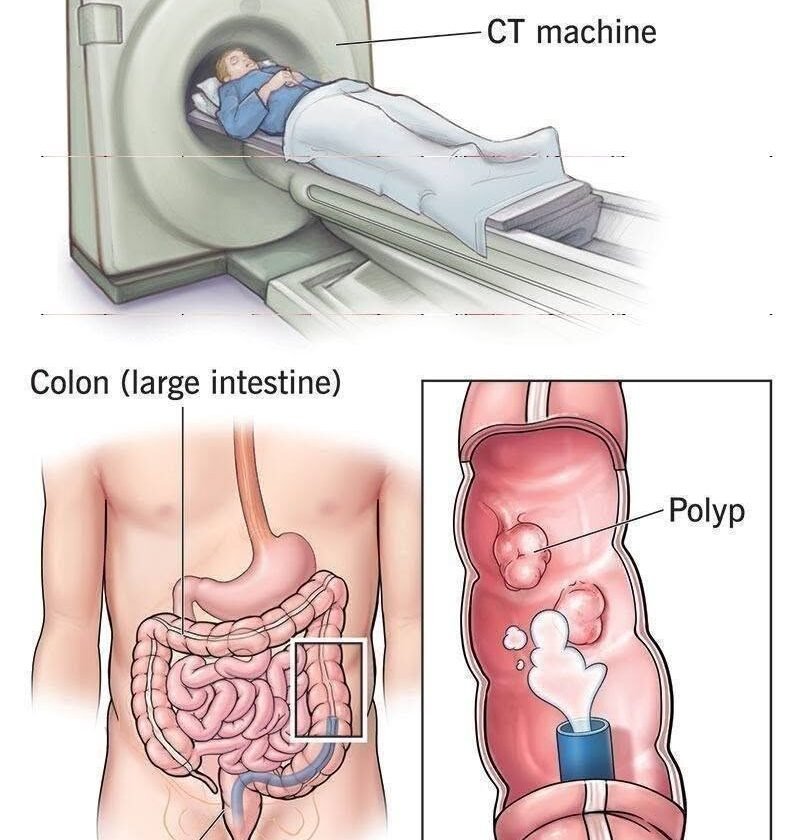
“New Method: Colonoscopy Will No Longer Be Invasive” — What Does This Mean?
That headline is misleading if it suggests traditional colonoscopy has been eliminated. Several less-invasive colorectal screening methods already exist, but they don’t completely replace conventional colonoscopy.
Methods you may be hearing about
-
CT colonography (“virtual colonoscopy”) — Uses CT scans to look for polyps and other abnormalities. It doesn’t require a camera to travel through the colon, but bowel preparation is still generally required. If a suspicious polyp is found, a conventional colonoscopy may still be necessary.
-
Stool-based screening tests — Tests such as fecal immunochemical testing (FIT) look for hidden blood in stool. Some newer tests also look for abnormal DNA. They’re non-invasive, but a positive result generally requires follow-up colonoscopy.
-
Colon capsule endoscopy — A person swallows a capsule containing a tiny camera that captures images as it passes through the digestive tract. Availability and recommended use vary.
-
Blood-based screening: Blood tests for colorectal-cancer biomarkers are an emerging option in some settings, but they aren’t equivalent to colonoscopy for detecting and removing polyps.
Why colonoscopy is still important
A conventional colonoscopy allows a clinician to directly examine the colon, take biopsies, and remove precancerous polyps during the same procedure. That’s a major advantage that most non-invasive tests don’t provide.
Bottom line: Newer screening technologies can reduce the need for an invasive examination for some people, but colonoscopy has not simply become obsolete.
If you send me part 2/2 of the post, I can identify exactly which “new method” it’s talking about and explain whether the claim is supported by medical evidence.