If Your Feet and Hands Are Swollen, Here’s What Your Body May Be Telling You
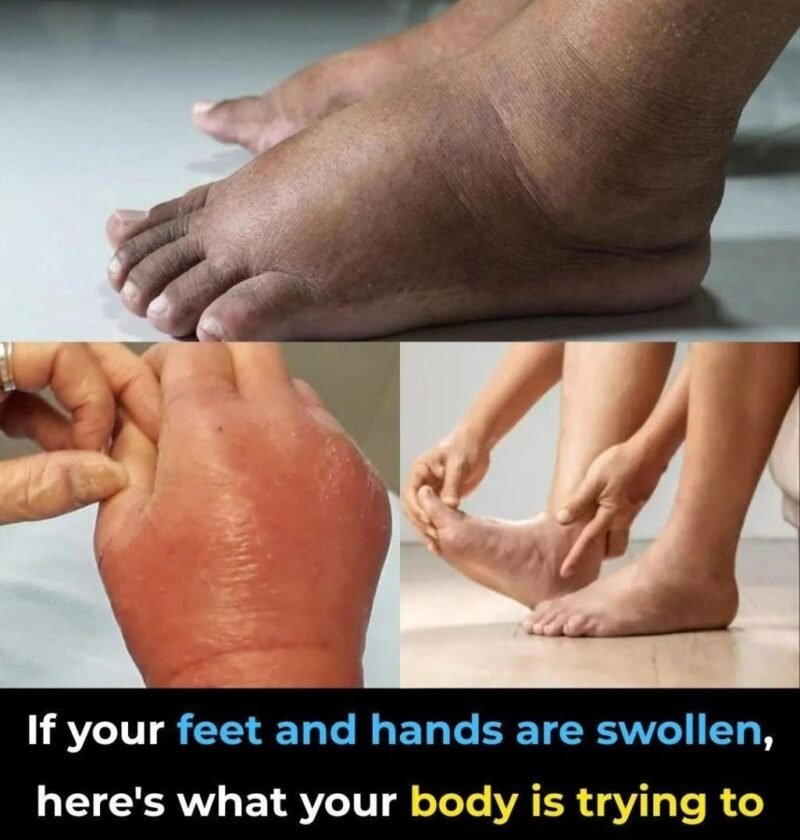
Swelling of the hands, feet, ankles, or legs is called edema. Sometimes it’s temporary and harmless, but new or persistent swelling can have several different causes.
Common possibilities
-
Standing or sitting for long periods: Fluid can accumulate in the lower limbs.
-
High salt intake: Excess sodium can cause the body to retain fluid.
-
Heat: Warm weather can temporarily increase swelling.
-
Certain medications: Some blood-pressure medicines, steroids, hormones, and other drugs can cause edema.
-
Venous problems: Poor return of blood from the legs can cause ankle and foot swelling.
-
Heart problems: Heart failure can cause fluid buildup, often accompanied by breathlessness or reduced exercise tolerance.
-
Kidney problems: Reduced kidney function can cause the body to retain salt and fluid.
-
Liver disease: Advanced liver disease can contribute to fluid accumulation.
-
Lymphatic problems: Damage or blockage of the lymphatic system can cause persistent swelling.
🚨 When swelling needs urgent attention
Seek urgent medical care if swelling is sudden or severe, particularly if:
-
One leg or arm suddenly becomes swollen, painful, red, or warm.
-
You have shortness of breath or chest pain.
-
You’re having difficulty breathing when lying down.
-
You develop sudden facial or tongue swelling, especially with difficulty breathing or swallowing.
These symptoms can indicate conditions such as a blood clot, serious heart/lung problems, or a severe allergic reaction.
What you can do
For mild swelling after prolonged standing or sitting, moving regularly, elevating your legs, and reducing excessive salt intake may help. Don’t simply take a “water pill” or diuretic without medical advice, because the appropriate treatment depends on the cause.
If swelling keeps returning or affects both hands and feet, arrange a medical evaluation. A clinician may review your medications and check your heart, kidneys, liver, circulation, and urine/blood tests.
Swelling is a symptom, not a diagnosis. The pattern—one side versus both sides, sudden versus gradual, and whether other symptoms are present—is what provides the important clues.