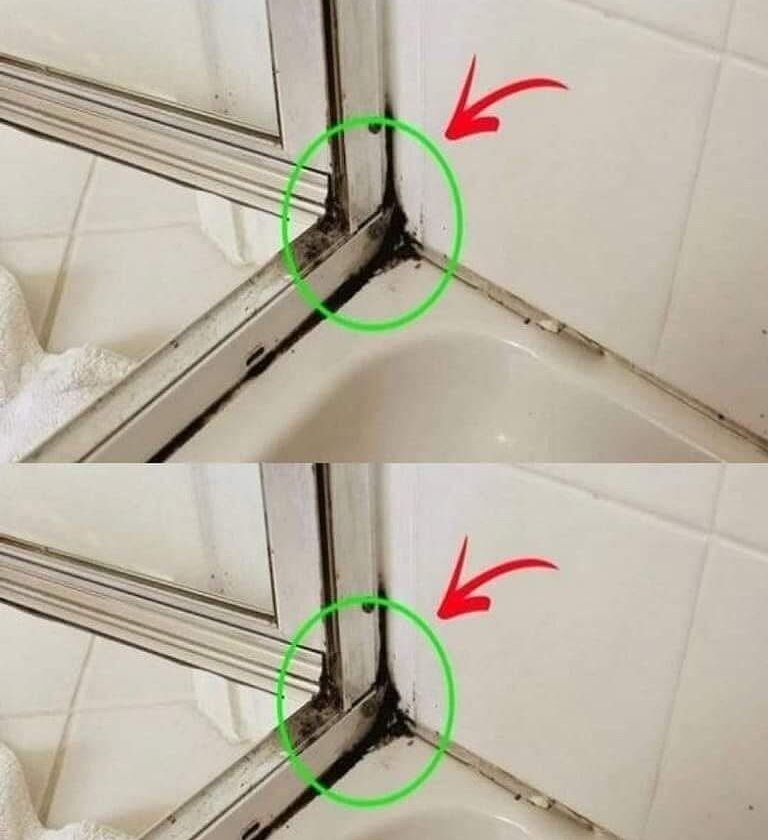
If mildew is growing on shower silicone/caulk, the fastest solution depends on whether the growth is superficial or has penetrated the silicone.
For surface mildew
-
Ventilate the bathroom and wear gloves.
-
Clean off soap scum and dirt first.
-
Apply a commercial bathroom mold/mildew cleaner that’s labeled safe for silicone, following its instructions.
-
Let it sit for the label-specified time, then scrub gently with an old toothbrush.
-
Rinse and dry the silicone thoroughly.
Never mix bleach with vinegar, ammonia, or other cleaners—dangerous gases can form.
If the black staining won’t come out
When mildew has penetrated the silicone, cleaning may only lighten it temporarily. The reliable fix is to remove the old silicone and recaulk:
-
Cut out all the old caulk.
-
Remove residue and clean the joint.
-
Allow the area to become completely dry.
-
Apply 100% bathroom-grade, mold-resistant silicone.
-
Let it cure for the manufacturer’s recommended time before exposing it to water.
Keep it from returning
Use the bathroom exhaust fan, leave the shower area open to dry, wipe excess water from the joints, and repair persistent leaks.
If the mildew is inside the wall, spreading extensively, or repeatedly returning despite proper cleaning, there may be an underlying moisture problem that needs attention.