If you’re asking what this headline means, it’s probably referring to newer non-invasive or less-invasive ways of examining the colon, but it does not mean that conventional colonoscopy has become obsolete.
What alternatives exist?
-
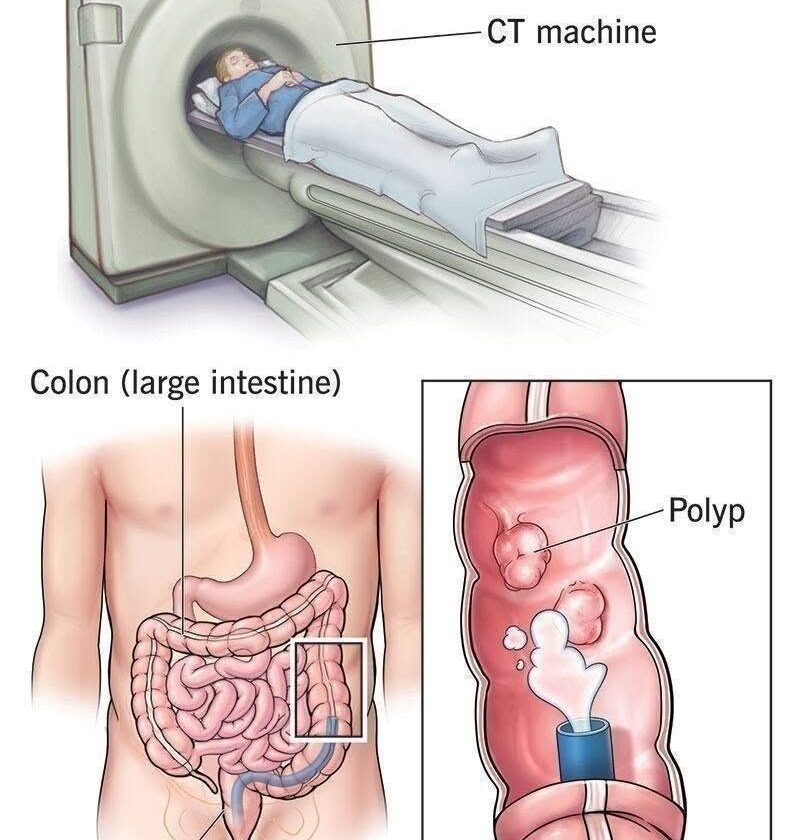
CT colonography (“virtual colonoscopy”) — Uses a CT scan to create images of the colon. It doesn’t require a camera to travel through the entire colon, but the bowel still generally needs to be emptied beforehand. If a suspicious polyp is found, a conventional colonoscopy may still be needed to remove it or take a biopsy.
-
Stool-based screening tests — Tests such as FIT look for microscopic blood in stool, while some tests also look for abnormal DNA. They’re non-invasive, but they screen for colorectal cancer rather than directly examining the colon. A positive result generally requires follow-up colonoscopy.
-
Capsule endoscopy — A person swallows a small camera capsule that travels through the digestive tract. Colon capsule endoscopy is available in some settings, but its role is more limited than standard colonoscopy and availability varies.
Why colonoscopy is still important
A conventional colonoscopy allows a doctor to directly inspect the colon and remove polyps or obtain tissue samples during the same procedure. That’s an important advantage that most non-invasive screening methods don’t provide.
So the headline would be more accurate as:
“Newer Colon-Cancer Screening Methods May Reduce the Need for Invasive Colonoscopy in Some People.”
If you meant a specific new method announced recently, tell me the name or share the article/image, and I can explain exactly what the new technology does.