Sure.
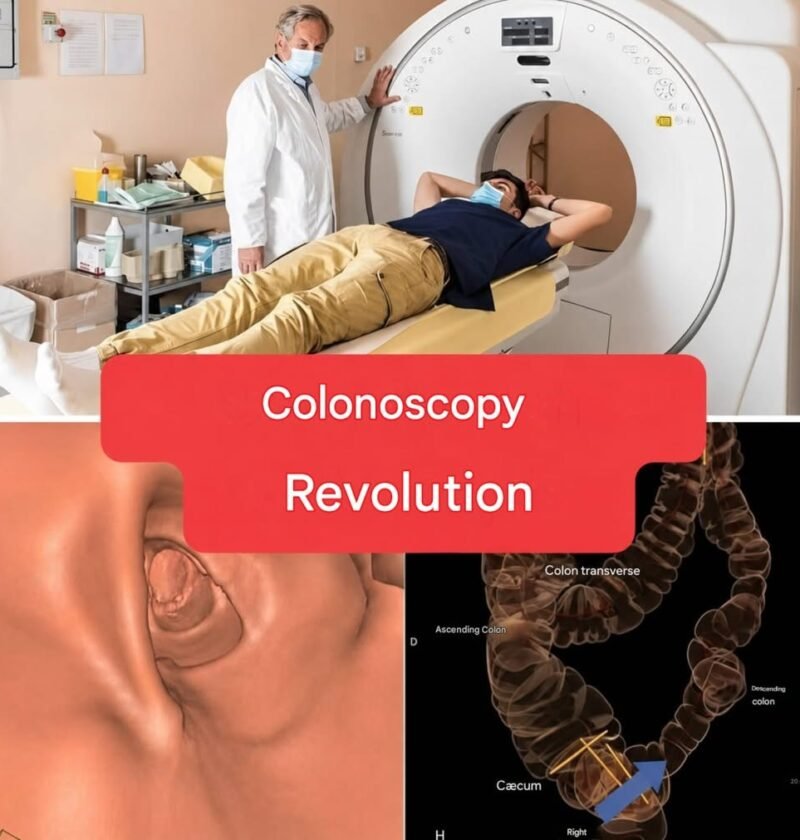
The statement “colonoscopy will no longer be an invasive examination” likely refers to newer, less-invasive ways of examining the colon
—especially CT colonography (virtual colonoscopy), capsule colonoscopy, and emerging AI/imaging technologies.
What is changing?
A traditional colonoscopy requires a flexible camera tube to be inserted through the rectum and guided through the entire colon. It can detect and remove polyps, but it is invasive and usually requires sedation.
Newer approaches can examine the colon without inserting a conventional endoscope:
-
CT colonography (“virtual colonoscopy”) — a CT scanner creates detailed 3D images of the colon. A small tube is still placed in the rectum to inflate the colon, but there is no camera traveling through the bowel.
-
Colon capsule endoscopy — the patient swallows a small capsule containing cameras. As it travels through the digestive tract, it takes thousands of images that are transmitted to a recording device.
-
AI-assisted imaging — artificial intelligence can analyze images and help identify polyps or suspicious lesions, potentially improving detection.
Does this mean ordinary colonoscopy will disappear?
Not yet. This is an important distinction.
Non-invasive or minimally invasive tests are useful for screening and detecting abnormalities, but conventional colonoscopy remains important because doctors can take biopsies or remove polyps immediately. If CT colonography or capsule examination finds a suspicious polyp, a conventional colonoscopy may still be required.
So a more accurate version of the headline would be:
“New technologies may allow many people to be screened for colon problems without undergoing a conventional colonoscopy.”
If you share part 2/2, I can explain the specific new method you’re referring to, including how it works, how accurate it is, advantages, limitations, and when it might become available.