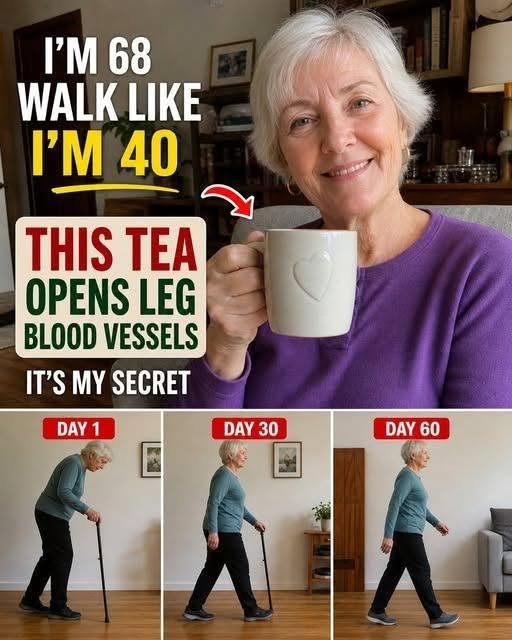
🍵 Over 60? Can 3 Teas Really Rebuild Muscle?
This headline is overstated. There is no tea proven to “rebuild muscle” or restore walking strength by itself. As we age, maintaining muscle requires resistance exercise, adequate protein, sufficient calories, and addressing medical or nutritional problems.
Some teas can still be healthy additions to your diet:
- 🍵 Green tea — contains catechins and may have modest metabolic and cardiovascular benefits, but it isn’t a muscle-building treatment.
- 🌿 Ginger tea — can be a pleasant, caffeine-free drink and may help some people with nausea or digestive discomfort. Evidence that it meaningfully increases muscle mass is lacking.
- 🌼 Herbal teas such as chamomile — can be a relaxing, caffeine-free option, potentially supporting good sleep. Better sleep is helpful for recovery, but chamomile itself doesn’t rebuild muscle.
💪 What actually helps preserve muscle after 60?
- Resistance training: Exercises such as chair squats, resistance bands, or weights provide the stimulus muscles need to become stronger.
- Adequate protein: Include protein-rich foods such as eggs, fish, dairy, beans, lentils, poultry, or other appropriate sources throughout the day.
- Vitamin D and calcium: Important for bone and muscle function, particularly if you’re deficient.
- Balance and walking exercises: These can improve mobility and reduce fall risk.
If an older adult is experiencing rapidly worsening weakness, difficulty getting out of a chair, repeated falls, or a sudden change in walking, don’t try to treat it with tea. It deserves medical evaluation.
Bottom line: Enjoy tea if you like it, but no three teas can rebuild lost muscle or reliably make an older person walk strongly again. Strength training plus adequate nutrition is the evidence-based approach.