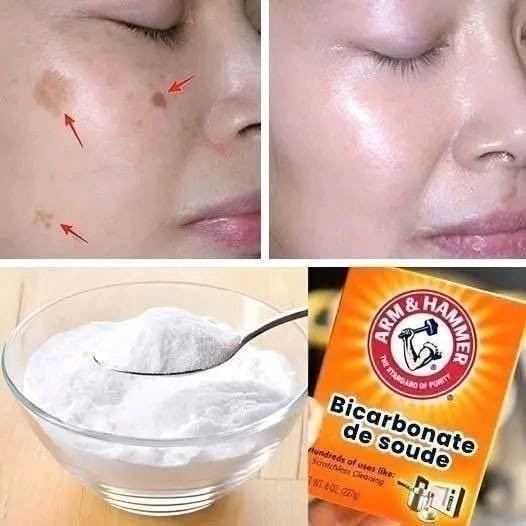
Baking soda is often promoted online as a “natural” remedy for dark spots, wrinkles, and dark circles, but there is limited evidence that it works for these concerns, and using it directly on the face can cause problems.
Why baking soda may not be a good facial treatment
- It is alkaline (high pH), while healthy skin is naturally slightly acidic. Applying it can disrupt the skin barrier.
- It can cause dryness, irritation, redness, or burning, especially on sensitive skin.
- Its grainy texture can act as a harsh scrub and may worsen discoloration through irritation.
Safer options for common concerns
Dark spots (hyperpigmentation):
- Use daily broad-spectrum sunscreen (SPF 30 or higher) to prevent spots from getting darker.
- Ingredients with better evidence include:
- Vitamin C
- Niacinamide
- Azelaic acid
- Retinoids (such as retinol, used carefully)
Wrinkles and fine lines:
- Sunscreen is one of the most effective preventive steps.
- Retinoids can help improve skin texture and collagen-related changes over time.
- Moisturizers containing ingredients like hyaluronic acid can temporarily improve the appearance of fine lines by hydrating the skin.
Dark circles:
- They can result from genetics, thin skin, shadows from facial structure, allergies, lack of sleep, or pigmentation.
- Helpful steps may include:
- Adequate sleep and hydration
- Treating allergies if present
- Gentle eye products with ingredients such as caffeine or niacinamide (results vary)
If you still want to try baking soda for another purpose, avoid applying it as a face mask or scrub. A patch test on a small area of skin is safer, but it does not guarantee your face will tolerate it.
If you tell me your age, skin type (oily/dry/sensitive), and whether the dark spots are from acne, sun exposure, or something else, I can suggest a more suitable routine.