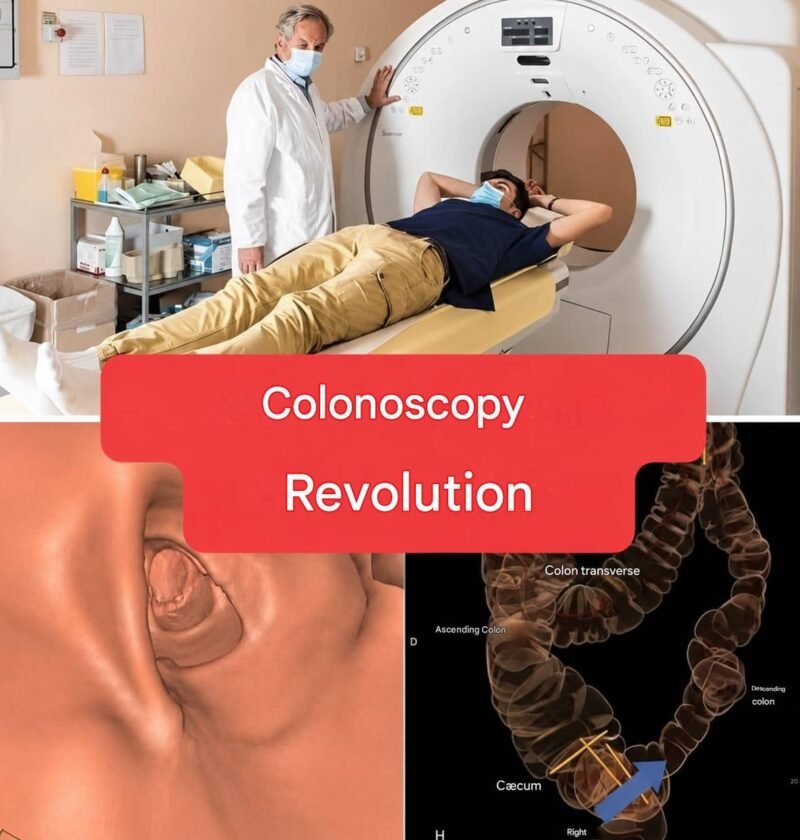
The claim “colonoscopy will no longer be an invasive examination” refers to newer approaches being developed or already available that aim to reduce the need for traditional colonoscopy in some situations. However, it does not mean colonoscopy has been completely replaced.
Traditional colonoscopy remains an important test because it allows doctors to:
- Directly view the inside of the colon
- Remove polyps during the same procedure
- Take biopsies if needed
Newer or less invasive options include:
- Stool-based screening tests (such as fecal immunochemical tests, or FIT, and stool DNA tests): These look for signs of colorectal cancer or bleeding and are done at home, but a positive result usually requires a follow-up colonoscopy.
- CT colonography (“virtual colonoscopy”): A CT scan creates images of the colon without inserting a camera through the entire colon. It still requires bowel preparation and may not allow immediate removal of polyps.
- Blood-based or molecular tests: Researchers are developing tests that detect cancer-related signals in blood or other samples, but these are not yet a universal replacement for colonoscopy.
The future of colorectal screening is likely to involve more non-invasive tests for initial screening, with colonoscopy reserved for people who need further evaluation or treatment.
If you are referring to a specific “new method” mentioned in a news article (for example, a capsule camera, AI scan, blood test, or another technology), share the rest of the headline or the article text and I can explain what it is and whether it is actually available.