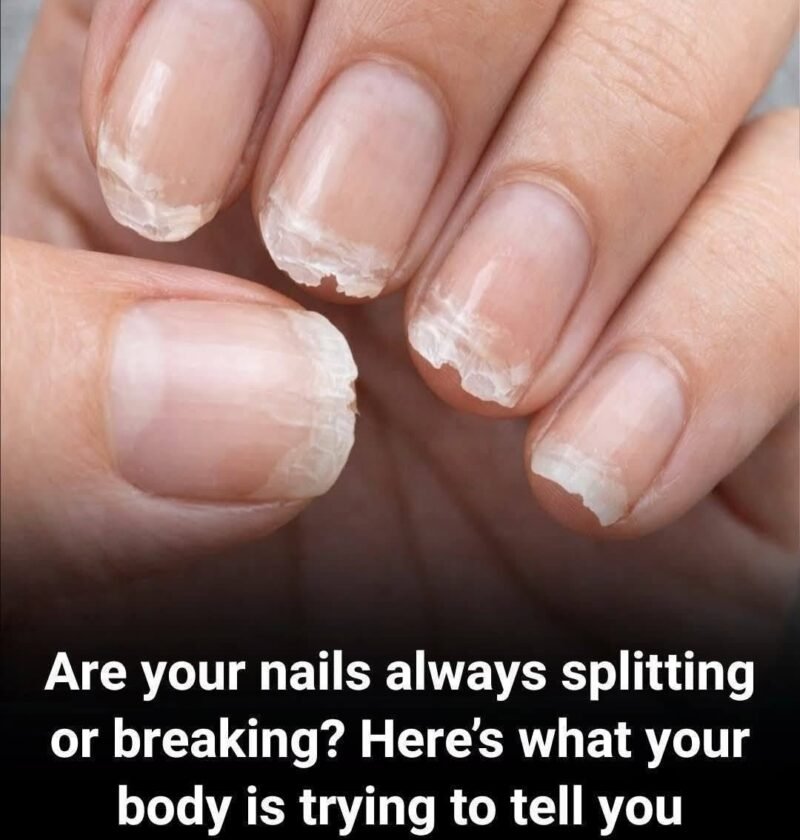
Brittle or Fragile Nails: What Your Body May Be Trying to Tell You
Brittle, peeling, splitting, or unusually thin nails are common and often harmless, but persistent changes can sometimes provide clues about your health. They don’t diagnose a specific condition by themselves, so the pattern and other symptoms matter.
1. Your nails may simply be too dry
Frequent handwashing, sanitizers, detergents, cleaning products, and repeated exposure to water can make nails dry and fragile.
What may help: Wear gloves when cleaning and regularly apply a thick moisturizer or petroleum jelly to your nails and cuticles.
2. Iron deficiency may be a possibility
Iron-deficiency anemia can sometimes be associated with thin, brittle or spoon-shaped nails (koilonychia).
If brittle nails occur along with unusual tiredness, weakness, pale skin, shortness of breath, or dizziness, talk with your healthcare professional. A blood test can check for anemia and iron deficiency.
3. Thyroid problems can affect nails
Both an underactive and overactive thyroid can cause changes to the nails, hair, and skin. Brittle nails alone don’t mean you have a thyroid disorder, but persistent nail changes accompanied by symptoms such as unexplained weight changes, temperature sensitivity, or changes in heart rate deserve medical attention.
4. Nutritional deficiencies are possible—but don’t assume
Poor nutrition or certain deficiencies can affect nail growth. However, brittle nails don’t automatically mean you need biotin, iron, zinc, or another supplement.
It’s better to identify a deficiency before taking high-dose supplements.
5. Aging can make nails more fragile
Nails naturally become thinner, drier, and more prone to splitting as we get older. This is especially common in fingernails.
6. Nail products and manicures may be contributing
Acetone, frequent nail-polish removal, gel manicures, acrylics, and aggressive filing can weaken the nail plate.
Giving your nails occasional breaks and avoiding picking or peeling off artificial nails can reduce damage.
7. Fungal infection can change the nails
A fungal infection may cause nails to become thickened, discolored, crumbly, or distorted rather than simply dry and brittle.
If only one or a few nails are changing significantly, especially with discoloration or debris underneath, have them examined rather than assuming it’s a vitamin deficiency.
8. Skin conditions can involve the nails
Conditions such as psoriasis and eczema can affect nail growth and appearance. Look for additional clues such as pitting, ridges, discoloration, or changes to the surrounding skin