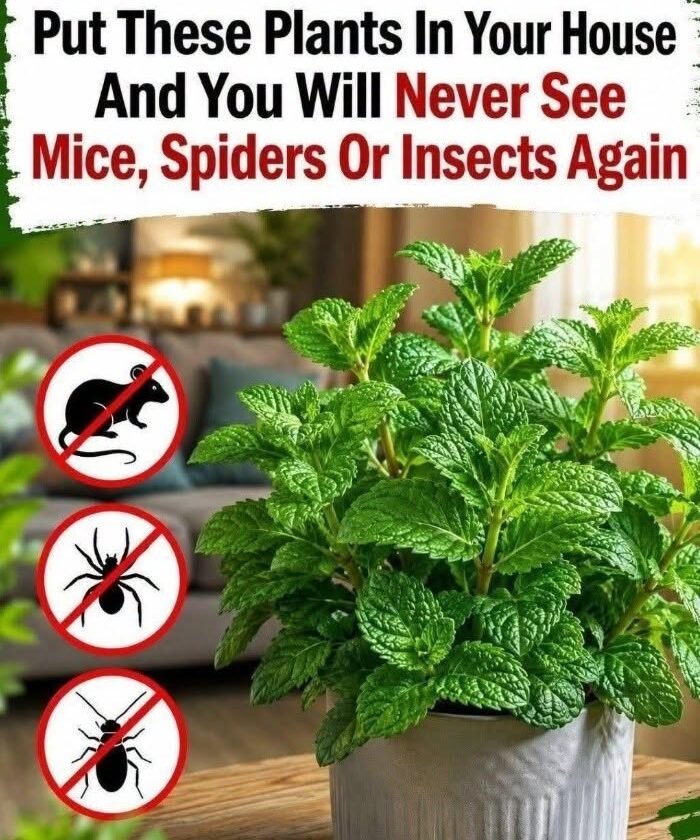
Using specific aromatic plants is one of the easiest, most eco-friendly ways to deter mice, spiders, and unwanted insects from your home and garden. Pests rely heavily on their sense of smell and chemical receptor tracking; pungent oils, strong fragrances, and natural compounds overwhelm their systems, causing them to move elsewhere.
Here are 8 powerful plants that naturally repel mice, spiders, and common insects:
1. Peppermint (Mentha x piperita)
-
What it repels: Mice, spiders, ants, and mosquitoes.
-
Why it works: Peppermint is rich in menthol, which acts as a powerful sensory irritant to pests. Mice and insects find the intense, sharp aroma completely intolerable and will actively avoid areas where it is present.
-
Best placement: Keep potted mint near kitchen entryways, windowsills, and baseboards, or use cotton balls soaked in peppermint essential oil in tight spaces. (Note: Plant mint in containers, as it spreads aggressively in gardens.)
2. Lavender (Lavandula)
-
What it repels: Spiders, mice, fleas, flies, and mosquitoes.
-
Why it works: While humans find the scent of lavender calming (thanks to compounds like linalool), pests despise it. The heavy floral aroma overloads their olfactory senses, disrupting their ability to navigate.
-
Best placement: Plant lavender near sunny entry points and patios, or place dried bundles of lavender in closets, drawers, and corners prone to spiders.
3. Rosemary (Salvia rosmarinus)
-
What it repels: Spiders, mosquitoes, mice, and various garden bugs.
-
Why it works: Rosemary contains volatile oils like camphor and eucalyptol. The woody, pine-like scent acts as a natural sensory jammer for pests trying to hunt or forage.
-
Best placement: Grow rosemary in pots near doorways or sunny windows. You can also boil fresh or dried rosemary to make a DIY insect-repellent spray.
4. Chrysanthemums (Chrysanthemum morifolium)
-
What it repels: Roaches, ants, ticks, fleas, bedbugs, and spiders.
-
Why it works: Mums contain pyrethrum, a natural compound frequently used in commercial insecticides because it directly attacks the nervous systems of insects and arachnids.
-
Best placement: Great for outdoor porches and garden borders to keep bugs from crossing the threshold. (⚠️ Warning: Chrysanthemums are toxic to cats and dogs if ingested, so keep them out of reach of pets.)
5. Eucalyptus (Eucalyptus globulus)
-
What it repels: Spiders, bees, and general crawling bugs.
-
Why it works: The active compound eucalyptol gives the plant a distinct, medicinal, and heavy vapor that pests avoid.
-
Best placement: Dwarf eucalyptus varieties thrive in bright indoor spots like bathrooms, or you can hang fresh eucalyptus branches near showers and entry points.
6. Lemongrass (Cymbopogon citratus)
-
What it repels: Mosquitoes, fruit flies, and mice.
-
Why it works: Lemongrass contains natural citronella oil. Its strong, citrusy punch masks the scents that pests use to find food and shelter.
-
Best placement: Patio containers or near doors where flying insects try to sneak indoors during warmer months.
7. Marigolds (Tagetes)
-
What it repels: Garden pests, mosquitoes, aphids, and mice.
-
Why it works: Marigolds have a distinct, musky, and pungent aroma driven by chemical compounds in their leaves and roots that many animals and insects find deeply offensive.
-
Best placement: Plant them extensively around garden beds, patio perimeters, and foundation walls to act as an aromatic shield.
8. Catnip (Nepeta cataria)
-
What it repels: Mice, mosquitoes, fleas, and ants.
-
Why it works: Ironically, while catnip drives cats wild, it acts as a strong deterrent for many common pests. Its minty, herbal chemical makeup acts as a powerful natural repellent.
-
Best placement: Near windows or garden borders (though keep in mind it may attract neighborhood felines if you have outdoor cats).
Pro-Tip for Maximum Effectiveness
Living plants emit a continuous, mild scent, but you can amplify their power by bruising the leaves to release extra essential oils, using essential oil diffusers matching the plants, or placing cotton balls soaked in plant extracts in dark, hidden corners where pests like to hide.
Are you looking to protect a specific area—like a kitchen, a patio, or a basement—from a particular pest?