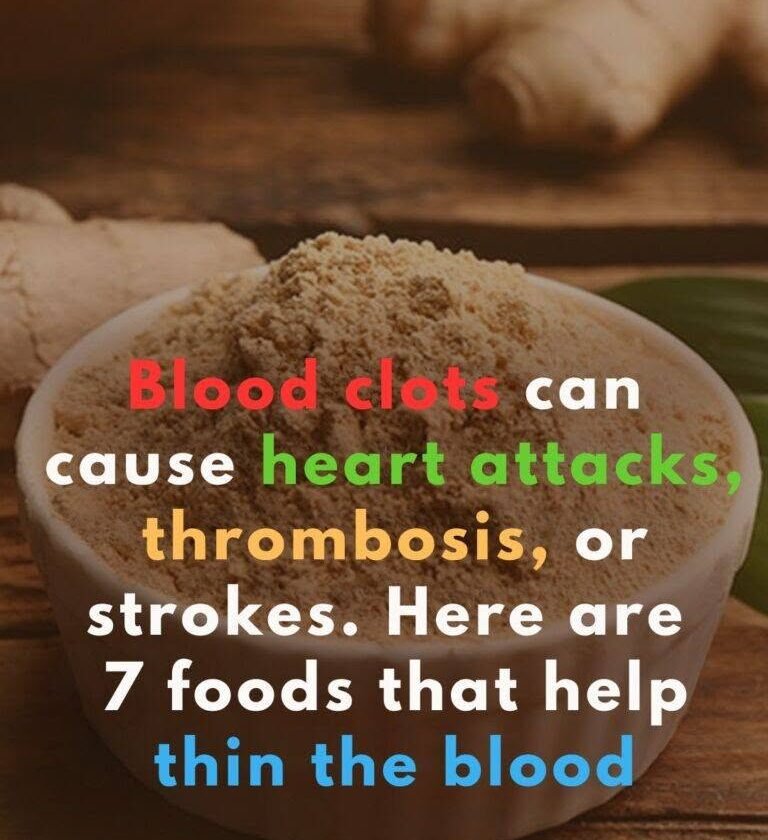
7 Foods Often Called “Blood-Thinning” Foods — What They Really Do
The phrase “blood-thinning foods” can be misleading. Foods don’t work like prescription anticoagulants, and no food should be relied on to prevent or treat a blood clot.
Some foods contain compounds that may influence platelet activity, inflammation, or cardiovascular health, but the effects are generally much weaker and less predictable than medication.
7 foods worth knowing about
-
Garlic 🧄 — Contains sulfur compounds that may affect platelet activity.
-
Ginger 🫚 — Has compounds studied for possible effects on platelet aggregation.
-
Turmeric — Curcumin has anti-inflammatory and other biological effects, although food amounts shouldn’t be treated as an anticoagulant.
-
Fatty fish 🐟 — Salmon, sardines, and similar fish provide omega-3 fatty acids that support cardiovascular health.
-
Berries 🫐 — Rich in polyphenols and other compounds associated with cardiovascular health.
-
Cocoa/dark chocolate 🍫 — Cocoa contains flavanols that may benefit vascular function when consumed as part of a balanced diet.
-
Green leafy vegetables 🥬 — Excellent sources of vitamin K and other nutrients. Importantly, vitamin K doesn’t mean they should be avoided by people taking warfarin; consistent intake is generally the key.
⚠️ If you take blood-thinning medication
If you’re taking warfarin, apixaban, rivaroxaban, dabigatran, clopidogrel, aspirin, or another antithrombotic, don’t deliberately increase large amounts of garlic, ginger, turmeric, fish-oil supplements, or herbal products without checking with your clinician or pharmacist. Some supplements can increase bleeding risk or interact with medication.
And if you suspect a blood clot—such as new swelling, warmth, redness, and pain in one leg—don’t try to treat it with food. Sudden shortness of breath, chest pain, coughing blood, or fainting requires emergency medical attention.
Bottom line: These foods can be part of a heart-healthy diet, but calling them “powerful blood thinners” overstates the evidence. Prescription anticoagulants should never be replaced with dietary remedies.