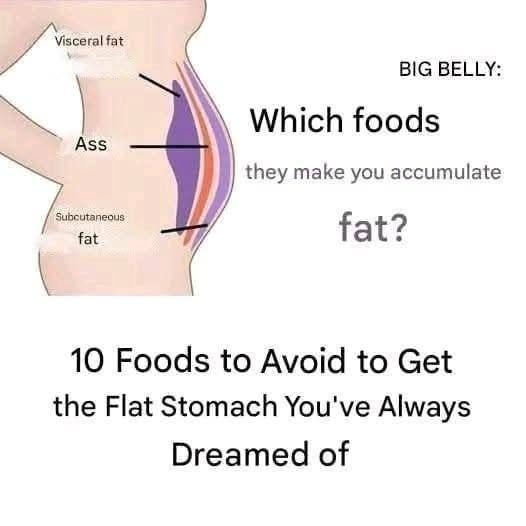
10 Foods to Limit if You Want a Flatter, Less Bloated Stomach
A “flat stomach” isn’t determined by avoiding a particular list of foods. Belly fat decreases through overall fat loss, while bloating can change your waistline temporarily because of gas, fluid, or digestion.
If your goal is less bloating and better weight management, these are foods and drinks worth limiting—not necessarily eliminating:
-
Sugary soft drinks — Add calories and carbonation can worsen bloating for some people.
-
Sweetened juices and energy drinks — Can provide substantial added sugar without much satiety.
-
Ultra-processed snack foods — Chips, cookies, and similar foods can be calorie-dense and easy to overeat.
-
Deep-fried foods — High calorie density and fat content can make weight management more difficult.
-
Processed meats — Sausages, bacon, and similar foods can be high in sodium and saturated fat.
-
Large amounts of refined carbohydrates — Frequent large portions of white bread, pastries, and refined snacks can make it harder to maintain a calorie deficit.
-
Alcohol — Provides calories and can contribute to overeating.
-
Very salty foods — High sodium intake can temporarily increase water retention and make you feel more bloated.
-
Sugar-free products containing certain sweeteners — Sugar alcohols such as sorbitol and xylitol can cause gas or diarrhea in some people.
-
Foods that personally trigger bloating — Beans, onions, dairy, wheat, or other foods may cause symptoms in some individuals but not others.
What works better than a “flat-stomach” food blacklist?
Build meals around vegetables, fruit, whole grains, legumes, lean protein, and unsaturated fats, while keeping portions appropriate for your energy needs. Regular resistance training plus aerobic activity can help reduce body fat while preserving muscle.
And don’t be fooled by claims that a particular tea, detox drink, or food will specifically burn belly fat. Your body doesn’t selectively remove fat from the abdomen because of one food.
If persistent abdominal bloating is new or accompanied by pain, vomiting, blood in the stool, unexplained weight loss, or a change in bowel habits, get it medically evaluated rather than treating it as ordinary belly fat.