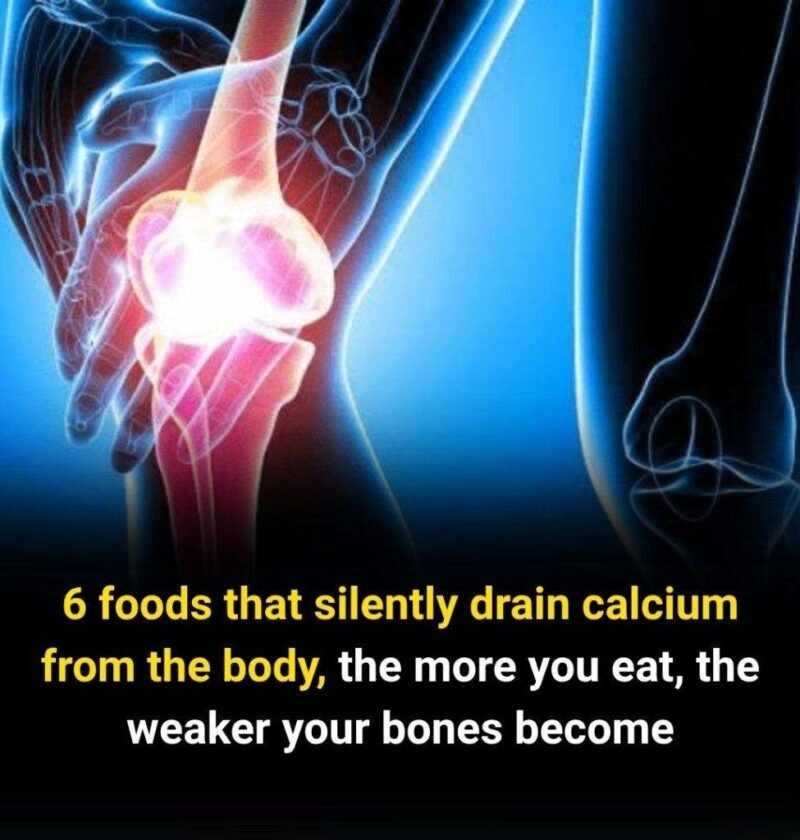
6 Foods That Can Affect Calcium Balance
The idea that certain foods “silently drain calcium” is overstated. Most healthy people don’t lose meaningful amounts of calcium simply because they eat these foods. However, some dietary habits can reduce calcium absorption or increase calcium loss when consumed excessively or when overall calcium intake is inadequate.
-
Very salty foods 🧂
High sodium intake can increase the amount of calcium lost in urine. Limiting highly processed and salty foods is generally beneficial. -
Cola and some soft drinks 🥤
Frequent consumption of cola is associated with poorer bone-health patterns, particularly when it replaces calcium-rich beverages. The concern isn’t that one drink suddenly removes calcium from your bones. -
Very high amounts of caffeine ☕
Excessive caffeine can modestly increase calcium loss. For most adults, moderate coffee or tea consumption isn’t a major concern when calcium intake is adequate. -
Foods extremely high in oxalates 🌿
Spinach and some other vegetables contain oxalates that bind calcium and reduce its absorption from that particular food. This doesn’t mean you should avoid spinach; it can still be part of a healthy diet. -
Foods very high in phytates 🌾
Certain whole grains, seeds, and legumes contain phytates that can reduce mineral absorption. Soaking, fermenting, or cooking can reduce their phytate content. -
Excessive alcohol 🍺
Heavy alcohol consumption can interfere with calcium metabolism and bone health and is associated with increased fracture risk.
What matters more
Rather than eliminating these foods, focus on getting enough calcium and vitamin D, along with adequate protein and regular weight-bearing activity.
Good calcium sources include milk, yogurt, cheese, fortified plant milks, calcium-set tofu, and some fish eaten with their bones.
If you’re concerned about osteoporosis, frequent fractures, or calcium deficiency, it’s better to discuss your diet and risk factors with a healthcare professional than to rely on lists of “calcium-draining” foods.