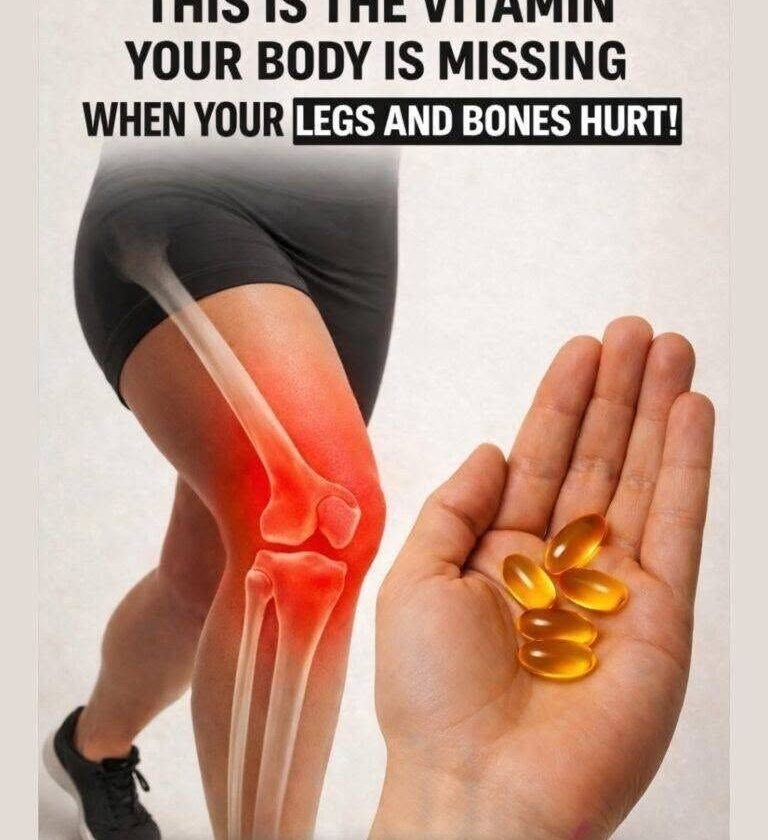
That “…See More” hook is almost universally pointing to Vitamin D—often paired in supplement ads with Vitamin K2, Calcium, or Magnesium.
Unlike many internet health claims that exaggerate tiny effects, this one actually has solid medical grounding: severe Vitamin D deficiency genuinely causes deep bone aching and leg muscle pain (a condition known as osteomalacia in adults).
Why Low Vitamin D Makes Legs and Bones Ache
-
Bone mineralization: Vitamin D is required for your gut to absorb calcium and phosphorus. Without enough of it, your bones lose mineral density and develop microscopic softening, which feels like a dull, deep, throbbing ache—most noticeably in the shins, thighs, hips, pelvis, and lower back.
-
Muscle weakness and heaviness: Muscle fibers have Vitamin D receptors. Low levels frequently cause proximal muscle weakness (making it harder to climb stairs or stand up from a low chair) alongside generalized leg fatigue and cramping.
-
Why it’s so common: Even in sunny regions, spending most of the day indoors, wearing full-coverage clothing, having darker skin (which needs more sun exposure to produce Vitamin D), or relying on foods not fortified with Vitamin D makes deficiency extremely widespread.
Other Nutrients Often Bundled Into That Headline
If the post isn’t solely about Vitamin D, it usually adds one of these co-factors:
-
Magnesium: Required to activate Vitamin D in the body; low magnesium also causes tight, cramping leg muscles.
-
Calcium: The structural building block of bone—though taking high-dose calcium without Vitamin D (or when you already get enough from dairy/food) won’t fix bone pain on its own.
-
Vitamin B12: Relevant if the leg pain feels more like burning, tingling, or electric pins-and-needles (nerve pain) rather than a deep bone or muscle ache.
Two Things to Know Before Buying a Supplement
-
Test before taking megadoses: A simple 25-hydroxy Vitamin D blood test tells you whether you are actually deficient and what dose you need. Because Vitamin D is fat-soluble, taking massive daily doses without knowing your baseline can lead to toxicity (excess calcium in the blood, kidney strain, and nausea).
-
Not all leg and bone pain is nutritional: Persistent, localized, or worsening bone pain—especially pain that wakes you up at night, comes with swelling or redness, or follows an injury—should be evaluated by a doctor rather than treated with over-the-counter vitamins.
Are you decoding another social-media ad, or dealing with aching legs or bones yourself?