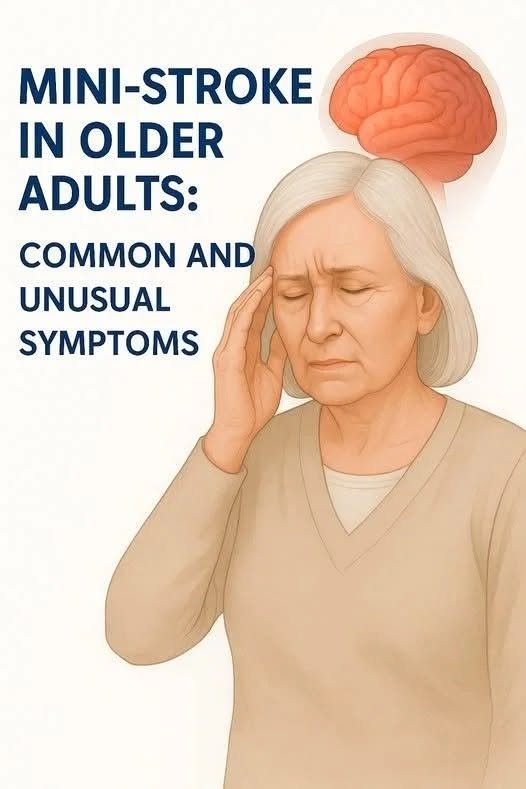
5 Critical Warning Signs of a Mini Stroke (TIA)
-
Sudden Face Drooping (F – Face): One side of the face droops, feels numb, or looks uneven when the person tries to smile.
-
Sudden Arm or Leg Weakness/Numbness (A – Arm): Weakness, heaviness, or tingling on one side of the body—for example, one arm drifts downward when raised, or a leg suddenly feels clumsy.
-
Sudden Speech or Comprehension Trouble (S – Speech): Slurred words, garbled speech, difficulty finding simple words, or sudden confusion understanding what others are saying.
-
Sudden Vision Changes (E – Eyes): Abrupt blurred vision, double vision, or temporary loss of vision in one or both eyes (often described as a dark curtain coming down over one eye).
-
Sudden Loss of Balance or Dizziness (B – Balance): Unexplained loss of coordination, sudden severe dizziness/vertigo, or stumbling without a clear mechanical cause.
Why Seniors and Families Often Miss a TIA (and Why Waiting Is Dangerous)
-
The “It Passed, So I’m Fine” Trap: Because symptoms vanish within 5 to 30 minutes, many older adults assume they just stood up too fast, slept awkwardly on an arm, or had low blood sugar—and decide to wait until a routine doctor’s visit weeks later.
-
No Way to Tell TIA vs. Full Stroke at the Start: When symptoms begin, nobody can tell whether they will resolve in 10 minutes or progress into permanent brain damage.
-
What to Do Immediately: Call emergency services (T – Time) right away—even if symptoms have already faded—and note the exact time symptoms started. Do not drive yourself to the hospital, and do not take aspirin on your own before a doctor rules out a bleeding (hemorrhagic) stroke with a brain scan.