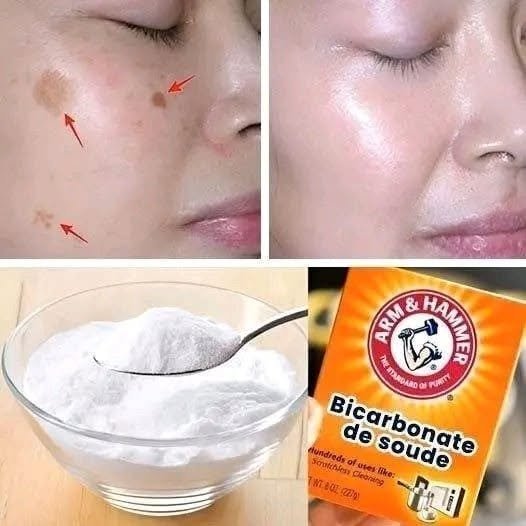
Why Baking Soda Doesn’t Work on Age Spots—and Can Harm Your Skin
-
It cannot reach pigment-producing cells: “Age spots” (solar lentigines) are concentrated clusters of melanin produced by melanocytes in the deeper layers of the epidermis after years of UV exposure. Baking soda only sits on the very top surface of dead skin cells; it has zero ability to break down melanin or slow pigment production.
-
It disrupts your skin’s protective acid mantle: Healthy skin has a naturally mildly acidic surface (pH ~4.5–5.5) that keeps moisture in and bacteria out. Baking soda is strongly alkaline (pH ~8.3–9). Rubbing it on skin strips protective lipids, triggers dryness, redness, micro-tears, and inflammation—and in medium-to-darker skin tones, that irritation can trigger post-inflammatory hyperpigmentation (PIH), making dark spots darker and harder to fade.
-
Common viral pairings make it worse: Clickbait “4 ways” lists usually mix baking soda with lemon juice, apple cider vinegar, coconut oil, or hydrogen peroxide. Lemon juice adds phytophotodermatitis risk (severe chemical burns/darkening when exposed to sunlight), while hydrogen peroxide damages healthy skin cells and slows healing.
What Actually Fades Age Spots Safely (Evidence-Based Options)
-
Daily Broad-Spectrum Sunscreen (SPF 30 or higher): The non-negotiable first step. Without daily UV protection, even the strongest brightening treatment fails because sunlight immediately re-triggers melanin in existing spots.
-
Over-the-Counter Pigment Faders:
-
Vitamin C (L-ascorbic acid) or Niacinamide: Antioxidants that help brighten uneven tone and block pigment transfer gently.
-
Azelaic Acid (10%–20%), Kojic Acid, or Alpha Arbutin: Target excess melanin production without harsh bleaching.
-
Retinoids (Retinol or Adapalene): Speed up skin cell turnover so pigmented cells shed faster over time.
-
-
Dermatologist Procedures (for stubborn spots): Prescription hydroquinone or tretinoin, professional chemical peels, cryotherapy, or targeted laser/IPL treatments can clear well-defined sun spots much faster and more evenly.