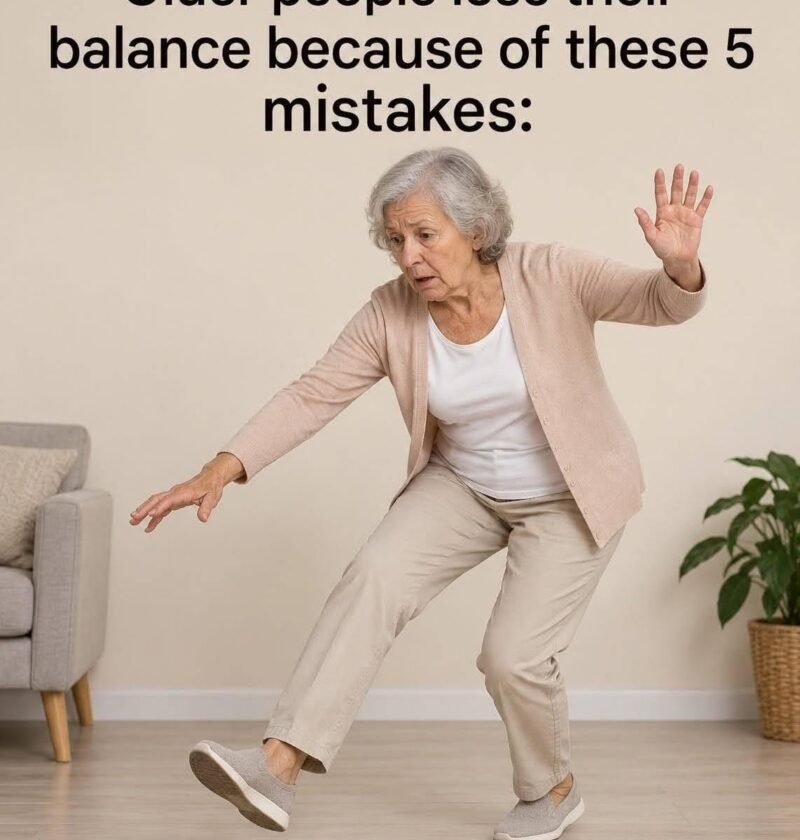
Maintaining steady balance as we age is one of the most critical factors for preserving independence and preventing dangerous falls. Yet, subtle changes in muscle strength, inner ear function, and vision mean that balance often declines gradually without us noticing until a stumble occurs.
While exercises and physical therapy are fantastic for building stability, many older adults unknowingly sabotage their balance through everyday habits. Here are five common mistakes that can quietly degrade balance and increase fall risk.
1. Wearing Unsupportive or “Zero-Support” Footwear Indoors
Many older adults prefer walking around the house in bare feet, soft socks, or worn-out, unsupportive slippers for comfort.
-
The Problem: Your feet are packed with thousands of tiny sensory receptors (proprioceptors) that tell your brain where your body is in space. Walking barefoot or in slick socks robs your feet of traction and tactile feedback, making it much harder for your nervous system to correct minor wobbles instantly.
-
The Fix: Wear supportive indoor shoes or slippers with firm, non-slip rubber soles and a secure fit around the heel, even when just walking around the house.
2. Neglecting Vision and Hearing Checkups
We often think of balance as purely a muscular or joint issue, but balance is actually a complex coordination task managed by three systems: your vision, your vestibular system (inner ear), and your proprioception (joints and muscles).
-
The Problem: Undetected vision changes (like worsening depth perception or outdated glasses prescriptions) or inner-ear issues can severely distort your spatial awareness. Furthermore, clinical studies have linked untreated hearing loss to a significantly higher risk of falls, as the brain diverts precious cognitive resources away from spatial balance to help process sounds.
-
The Fix: Get your eyes checked annually, and don’t ignore gradual hearing loss—treating it with hearing aids has been shown to dramatically improve stability.
3. Chronic Dehydration and Ignoring “Postural Dizziness”
Not drinking enough water throughout the day can have an immediate, dramatic impact on blood pressure and stability.
-
The Problem: Mild dehydration reduces your overall blood volume, which can lead to orthostatic hypotension—a sudden, temporary drop in blood pressure when you stand up too quickly. This causes that familiar woozy, lightheaded feeling that can instantly trigger a fall.
-
The Fix: Sip water consistently throughout the day, and practice the “pause rule”: when transitioning from lying down to sitting, or sitting to standing, pause for a few seconds to let your cardiovascular system adjust before walking.
4. Avoiding Challenging Movements (The “Fear of Falling” Trap)
Paradoxically, trying to stay completely safe by avoiding any movement that feels slightly wobbly can backfire terribly.
-
The Problem: When you stop challenging your balance, the neuromuscular pathways responsible for stability atrophy from disuse. Muscles weaken, reaction times slow down, and your fear of falling actually increases your physical vulnerability.
-
The Fix: Incorporate safe, controlled balance exercises into your routine—such as standing on one foot while holding onto a kitchen counter, or practicing heel-to-toe walking.
5. Over-Reliance on Low Furniture or Walls for Support
While reaching for furniture or leaning heavily against walls feels like a safe way to get around the house, it can hide underlying mobility issues.
-
The Problem: Constantly “furniture surfing” trains your body to rely on external props rather than activating your core and stabilizing muscles. It also masks progressive weakness in your hips and legs, leaving you unprepared if a surface isn’t there to catch you.
-
The Fix: If you find yourself consistently needing to grab walls or furniture to steady your gait, talk to your doctor about a physical therapy evaluation for assistive devices (like a proper cane or walker) that provide safe, reliable support.