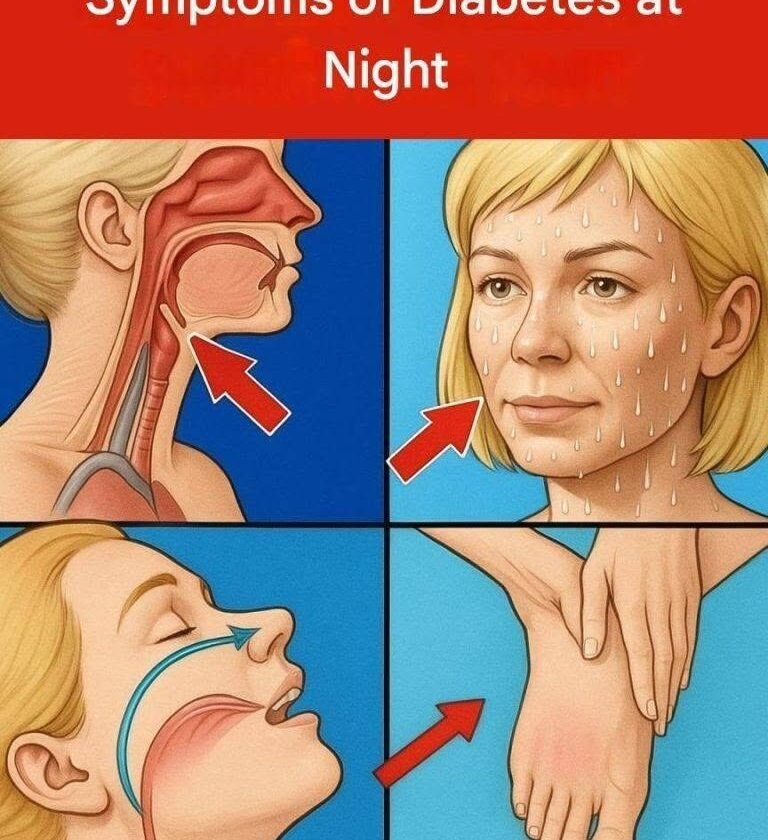
Diabetes headlines love to frame nighttime as a stealthy window where symptoms suddenly strike. While your body doesn’t pause its metabolic processes while you sleep, certain complications of unmanaged or fluctuating blood sugar do tend to make their presence felt or become much more noticeable once the lights go out and distractions fade.
Here are 5 diabetes symptoms that often appear or peak at night, and what is actually happening in your body:
1. Frequent Nighttime Urination (Nocturia)
-
What it means: Waking up multiple times a night to use the bathroom.
-
Why it happens at night: When your blood sugar levels are consistently high, your kidneys go into overdrive trying to filter and flush out the excess glucose. Because your body produces more urine to clear that sugar, your bladder fills up rapidly overnight, pulling you out of deep sleep.
2. Sudden Night Sweats and Clammy Skin
-
What it means: Waking up drenched in sweat or feeling unusually clammy, cold, or shaky during the middle of the night.
-
Why it happens at night: This is often a sign of nocturnal hypoglycemia (low blood sugar), which can happen if you took too much medication, injected too much insulin relative to your evening meal, or exercised heavily late in the day. When blood sugar drops dangerously low while sleeping, your body panics and releases a surge of emergency stress hormones (adrenaline and cortisol) to wake you up, triggering a sweat response.
3. Numbness, Tingling, or “Burning” Feet
-
What it means: A pins-and-needles sensation, numbness, or a fiery, burning pain specifically concentrated in your soles and toes that flares up when you get into bed.
-
Why it happens at night: During the day, you are moving around, distracted by activity, and your circulation is actively supported by muscle movement. Once you lie down to sleep, the lack of movement, combined with diabetic nerve damage (peripheral neuropathy), makes those nerve signals—or the lack of them—much louder and harder to ignore.
4. Extreme Thirst and a Dry Mouth
-
What it means: Waking up with a parched, sticky mouth and an intense craving for a massive glass of water in the middle of the night.
-
Why it happens at night: Closely tied to frequent urination, your body pulls water from its tissues to help dilute and flush out excess blood glucose. That fluid loss leaves you severely dehydrated by the time the night rolls around.
5. Vivid, Restless Nightmares or Morning Headouts (from Blood Sugar Swings)
-
What it means: Waking up feeling completely exhausted, experiencing intense or disturbing dreams, or waking up with a dull headache.
-
Why it happens at night: When blood sugar levels roller-coaster overnight—either spiking high or crashing low—your brain experiences micro-arousals and stress hormone floods. This disrupts your natural sleep architecture, preventing you from getting restorative REM and deep sleep, and often leaves you feeling drained and headachy by morning.
💡 The Takeaway: While occasional night waking happens to everyone, a cluster of these symptoms—especially relentless nighttime thirst combined with frequent bathroom trips—is a classic red flag that blood sugar levels might need checking.
Did this article focus on warning signs for undiagnosed diabetes, or was it aimed at people already managing blood sugar wanting to sleep better?