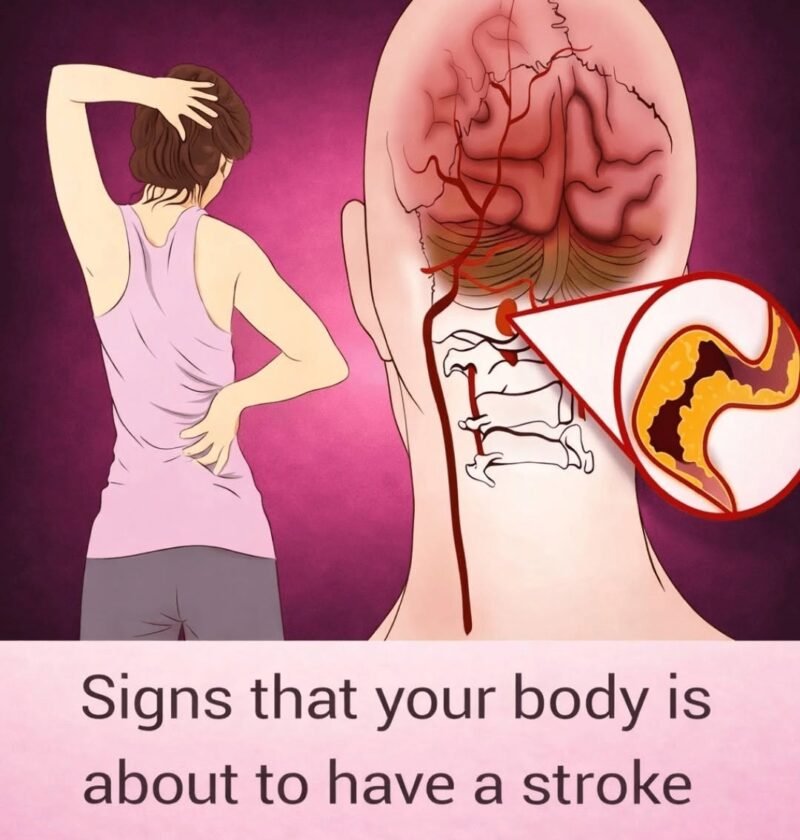
Recognizing the early warning signs of a stroke and taking immediate action is quite literally a matter of life and death. In neurology, the guiding phrase is “Time is brain”—every minute brain cells are deprived of oxygen, millions of neurons die.
Medical organizations like the American Stroke Association use the acronym FAST to help people spot the most common signs quickly, but there are several other critical red flags that should never be ignored.
Here are 10 early warning signs of a stroke:
The Classic FAST Signs (The Most Common Indicators)
1. Face Drooping
-
What happens: One side of the face suddenly droops or feels numb.
-
How to test: Ask the person to smile. If their smile is uneven, asymmetrical, or one side of the mouth fails to lift, it is a major stroke indicator.
2. Arm Weakness
-
What happens: Sudden weakness, numbness, or a heavy feeling in one arm.
-
How to test: Ask the person to raise both arms. If one arm drifts downward or they cannot lift it at all, it signals a neurological disruption affecting one side of the brain.
3. Speech Difficulty
-
What happens: Slurred speech, trouble speaking, or an inability to understand simple speech.
-
How to test: Ask the person to repeat a simple sentence (e.g., “The sky is blue”). If they slur their words, use completely incorrect words, or cannot speak, act immediately.
4. Time to Call Emergency Services (911)
-
What happens: If you observe any of the signs above, do not wait to see if it passes. Note the exact time the symptoms first appeared (this is critical for doctors to determine eligibility for clot-busting treatments) and call emergency services immediately.
Additional Critical Warning Signs
5. Sudden, Severe Confusion
-
What happens: An abrupt onset of disorientation, trouble comprehending what is happening around them, or sudden memory confusion without any clear cause.
6. Sudden Trouble Seeing in One or Both Eyes
-
What happens: A sudden darkening, blurring, double vision, or complete loss of vision in one or both eyes that comes on rapidly.
7. Sudden Trouble Walking, Loss of Balance, or Coordination
-
What happens: A sudden feeling of dizziness, unsteadiness, or a complete loss of balance and coordination (similar to severe intoxication) that makes it impossible to walk straight.
8. Sudden, Severe “Thunderclap” Headache
-
What happens: An agonizing, explosive headache that hits with zero warning—often described as “the worst headache of my life.” While typical with hemorrhagic strokes (bleeding in the brain), any sudden, abnormal headache paired with neurological deficits requires emergency care.
9. Sudden Numbness or Weakness on One Entire Side of the Body
-
What happens: A sudden loss of feeling or paralysis affecting an entire arm and leg on the exact same side of the body (e.g., the entire right side or left side).
10. Sudden Unexplained Nausea or Vomiting Paired with Dizziness
-
What happens: Particularly common in strokes affecting the brainstem, sudden vertigo, dizziness, vomiting, and trouble swallowing can occur out of nowhere, often mistaken for a bad stomach bug or inner ear issue.
A Crucial Note on “Mini-Strokes” (TIAs)
Sometimes people experience symptoms like sudden weakness or slurred speech that completely vanish within a few minutes to an hour. This is known as a Transient Ischemic Attack (TIA), or a mini-stroke.
Never ignore a TIA. It is a critical warning siren that a major stroke is likely on the horizon. Anyone who experiences temporary stroke symptoms must be evaluated by a physician or emergency room immediately.