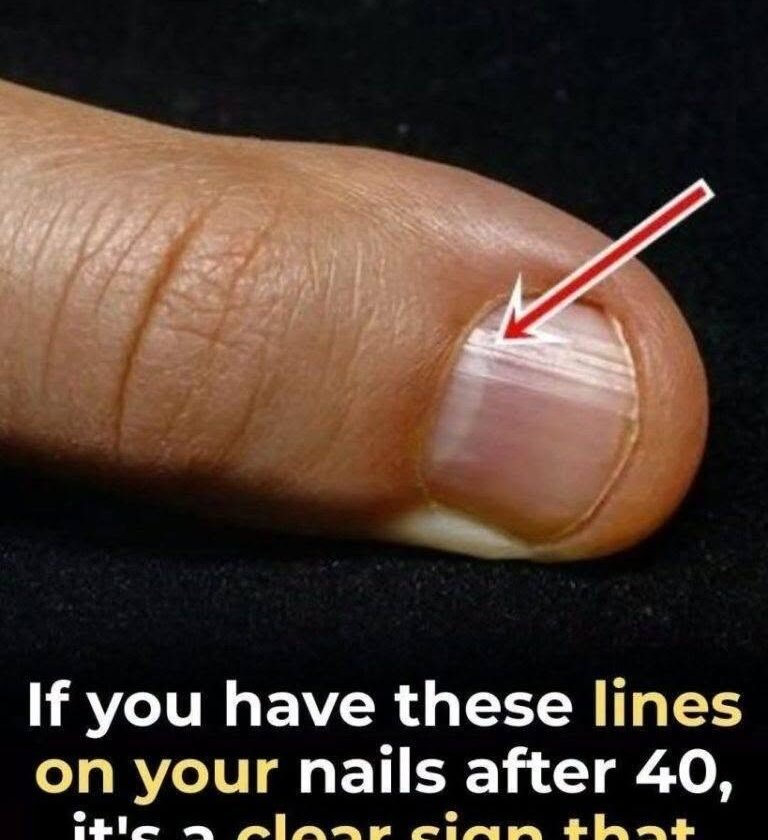
…alarmist health and wellness clickbait loves to use high-panic, terrifying hooks like “Your nails are screaming a deadly warning—if you see this after 40, it’s already too late!” to make you obsess over every normal ridge, spot, or minor change in your fingernails.
While fingernails can occasionally offer subtle clues about your overall nutritional status or systemic health, the unvarnished medical reality is much more grounded: just like the rest of your body, your nails undergo completely normal, natural structural changes as you cross into your 40s, 50s, and beyond.
Let’s separate internet nail-panic from actual dermatology and medical science.
What Actually Happens to Nails After 40?
As we age, the nail matrix (the tissue beneath the cuticle where new nail cells are created) slows down its production rate, and the nail bed’s ability to retain moisture declines. This leads to a few extremely common, harmless age-related changes:
1. Vertical Ridges (Onychorrhexis)
-
What you see: Tiny, straight lines or ridges running vertically from your cuticle to the tip of the nail.
-
The reality: This is the single most common age-related change in nails. Just as our skin develops fine lines over time, our nails develop vertical ridges. It is a completely normal part of aging and is not a sign of organ failure, vitamin deficiency, or a hidden disease.
2. Increased Brittleness and Dryness
-
What you see: Nails that split, peel, or break more easily than they did in your twenties.
-
The reality: Because aging skin and nails lose natural lipids and moisture—especially with frequent hand-washing, exposure to cleaning chemicals, or dry weather—nails become more brittle.
3. Slower Growth Rate
-
What you see: Your manicures last much longer because your nails simply don’t grow as fast as they used to.
-
The reality: Peripheral circulation and cellular turnover slow down naturally with age, leading to a measurable decrease in nail growth speed.
When Should You Actually Pay Attention to Your Nails?
While normal aging causes minor surface changes, dermatologists do look at specific, persistent nail anomalies as potential indicators of underlying health conditions:
-
Horizontal Ridges (Beau’s Lines): Deep grooves running horizontally across the nail indicate a temporary pause in nail growth, often caused by a severe illness, high fever, extreme physical stress, or major surgery months prior.
-
Dark Vertical Bands: A dark brown or black stripe running vertically down the nail bed—especially if it is new, changing, or spreading into the cuticle—should always be evaluated by a dermatologist to rule out rare conditions like subungual melanoma.
-
Nail Pitting or Discoloration: Tiny dents (pitting) or yellowing/thickening of the nails can sometimes be associated with inflammatory skin conditions like psoriasis or chronic fungal infections.
The Bottom Line
Don’t let sensationalized health articles scare you every time you look down at your hands. If your nails have normal vertical lines or feel a bit drier than they used to, a good hand cream and gentle care are all you need.