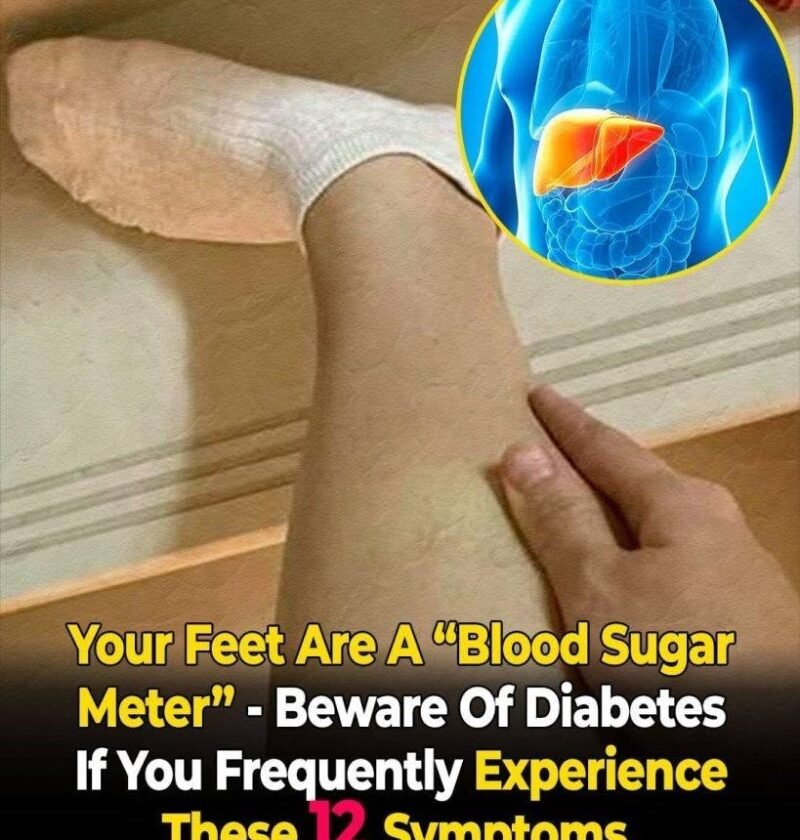
“Your Feet Are a Blood Sugar Meter” — Not Quite
Your feet can show complications associated with diabetes, but they cannot reliably tell you whether your blood sugar is high. Many people with type 2 diabetes have few or no symptoms, so the only dependable way to check is with blood-glucose testing such as an A1C test.
12 foot symptoms worth paying attention to
If you frequently experience any of these, particularly several together, it’s worth discussing them with a healthcare professional:
- Tingling or pins-and-needles
- Burning sensations
- Numbness or reduced sensation
- Foot pain
- Unusual sensitivity to touch
- Feet that feel unusually cold
- Changes in foot color
- Dry, cracked skin
- Thick or yellow toenails
- Recurring fungal infections
- Cuts, blisters, or sores that heal slowly
- Loss of hair on the toes or feet
Diabetes can damage nerves and blood vessels, making injuries harder to notice and wounds slower to heal.
⚠️ These symptoms don’t prove you have diabetes
Similar foot problems can occur with nerve compression, circulation disorders, fungal infections, nutritional problems, medications, and other conditions.
If you’re concerned about diabetes, ask about an A1C or blood-glucose test rather than trying to diagnose yourself from your feet. An A1C of 6.5% or higher is in the diabetes range; 5.7–6.4% is the prediabetes range.