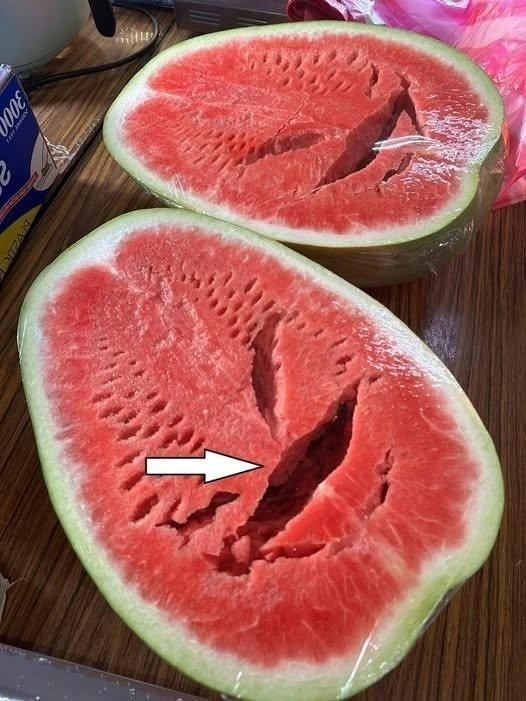
Sensationalized headlines warning you to “stop eating it immediately” if you see cracks inside a watermelon usually rely on fear tactics rather than actual food safety facts.
When you cut open a watermelon and notice internal cracking, separation, or hollow cavities, it doesn’t automatically mean the fruit is toxic or dangerous. Here is what is actually going on inside that melon:
What Causes Cracks Inside a Watermelon?
-
Hollow Heart: This is the most common reason for internal cracking or cavities. It happens during the growing process due to poor pollination or fluctuating weather conditions (like heavy rain followed by a dry spell) while the fruit is developing. The outer rind grows faster than the inner flesh, creating a hollow space or internal splits.
-
Over-ripeness: As a watermelon gets very old or over-ripe, the internal sugars start to ferment, and the core flesh breaks down, loses moisture, and shrinks away, causing cracking or a mealy texture.
-
Rough Handling: Severe drops or heavy impacts during shipping and handling can bruise the internal flesh, causing it to fracture even if the outer rind looks completely fine.
Is It Safe to Eat?
-
If it’s just “Hollow Heart”: Yes, it is completely safe to eat. The watermelon might be a little less crisp or slightly more mealy/dry in the center, but it poses zero health risks and contains no dangerous toxins.
-
If it’s spoiled or fermented: You should pass on it, but your senses will easily tell you. If the watermelon smells sour, has a yeasty or alcoholic odor, is leaking foul-smelling liquid, or shows signs of mold, discard it immediately.
Unless the melon is actively rotting or spoiled, internal cracks are simply a harmless cosmetic quirk of how it grew.
Have you ever cut open a watermelon only to find a hollow or cracked center inside?