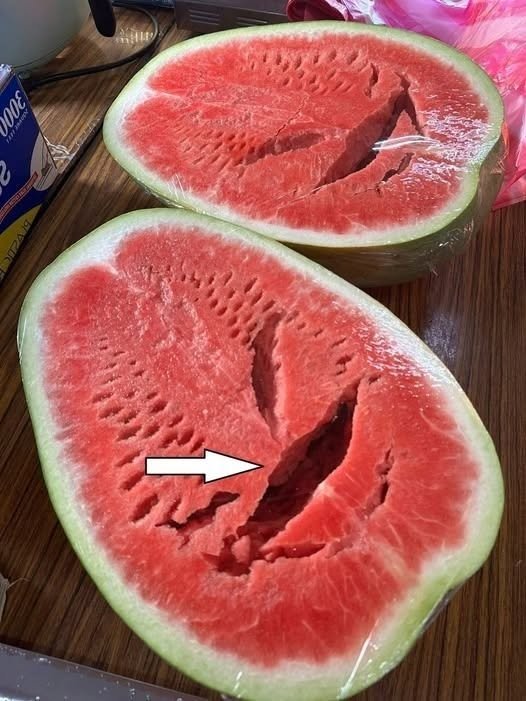
If you’re checking the headline “You cut open a watermelon and saw cracks? Stop eating it immediately!”, the “stop eating it” part is misleading.
🍉 What the cracks usually mean
Cracks or hollow spaces inside a watermelon are commonly called “hollow heart.” It’s a natural developmental condition associated with factors such as pollination and growing conditions. It is considered a quality defect, not evidence that the watermelon is poisonous or contaminated.
The USDA even specifically recognizes “hollow heart” as a watermelon defect in its grading standards.
Is it safe to eat?
Usually, yes. If the flesh is otherwise normal—firm, juicy, normally colored, and without an unpleasant smell—the internal cracks themselves aren’t a reason to throw the melon away. Some hollow-heart melons may even taste sweeter around the cracks.
There have also been viral claims that these cracks prove the watermelon was treated with the growth regulator forchlorfenuron (CPPU). Those claims are not supported by the available evidence; hollow heart occurs naturally and is not, by itself, evidence of chemical treatment.
🚮 When should you discard it?
Don’t eat the watermelon if you see actual spoilage, such as:
- Mold
- Rotten or severely discolored flesh
- A fermented or foul smell
- Very mushy/slimy texture
- Significant decay
- A damaged or contaminated exterior