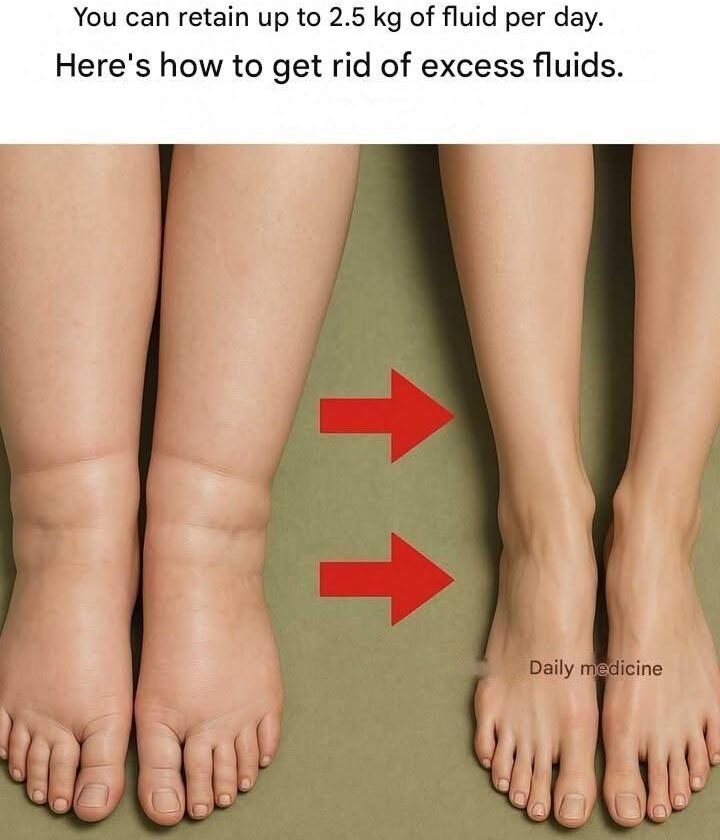
💧 “You Can Retain 2.5 kg of Fluid Per Day” — What You Should Know
It is possible for body weight to fluctuate by a few kilograms because of changes in water and glycogen, but the claim that you routinely “retain 2.5 kg of fluid per day” is misleading. Persistent fluid accumulation is called edema and can have many causes.
Common reasons for fluid retention
- 🧂 High sodium intake can temporarily increase water retention.
- 🪑 Sitting or standing for long periods can cause fluid to collect in the legs.
- 💊 Certain medications, including some blood-pressure medicines, can cause ankle swelling.
- 🫀 Heart problems can cause fluid to accumulate.
- 🫘 Kidney disease can interfere with normal fluid and sodium regulation.
- 🫁 Liver disease and some venous circulation problems can also cause edema.
What can help mild swelling?
If a healthcare professional has determined that the swelling isn’t caused by a serious condition:
- Reduce excessive salt intake.
- Walk and move your legs regularly.
- Elevate swollen legs when resting.
- Avoid staying in one position for prolonged periods.
- Ask your clinician whether compression stockings are appropriate.
Don’t try to rapidly “flush out” water by drinking excessive amounts of water or taking herbal diuretics. Prescription water pills (diuretics) should only be used as directed by a healthcare professional.
🚨 When swelling needs urgent attention
Get prompt medical care for sudden swelling in one leg, especially if it’s painful, warm, or red.
Seek emergency care if swelling occurs with chest pain, severe shortness of breath, fainting, or coughing up blood.
Bottom line: A sudden increase on the scale can partly reflect water, but persistent swelling isn’t simply excess water that needs to be “flushed.” Finding the underlying cause is the safest way to treat it.